

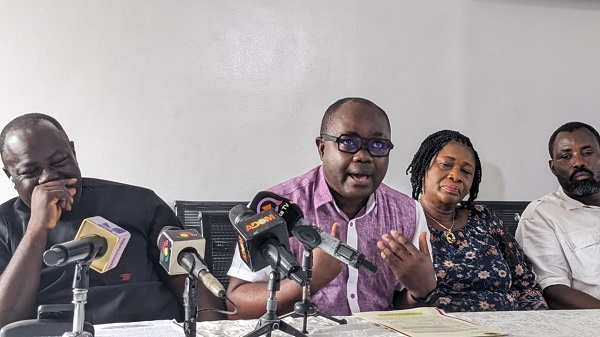
The Traders Advocacy Group Ghana (TAGG) has raised serious concerns over Parliament’s approval of an agreement between the Ghana Revenue Authority (GRA) and TRUEDARE Investments Limited for the introduction of a digital customs tracking and artificial intelligence audit system, warning that the deal could impose hidden costs on traders and consumers.
In a press statement dated December 29, 2025, TAGG described the agreement as opaque and potentially risky, questioning the justification for introducing a parallel system to the existing Integrated Customs Management System (ICUMS), which has been operational since 2020.
According to TAGG, the agreement is intended to introduce a digital inspection and tracking system for imported cargo containers, supplement ICUMS, address perceived weaknesses in customs tracking and documentation, and improve revenue mobilisation at what government sources have described as “no additional cost to the state.”
However, TAGG argues that ICUMS already provides end-to-end customs data management, including risk assessment, post-clearance audit and cargo tracking, and was specifically introduced to reduce costs and leakages within the customs system. The group insists that if government believes ICUMS has material gaps, the technical assessments supporting that position should be made public.
TAGG further disclosed findings from its own investigation into TRUEDARE Investments Limited, which it says is incorporated in Cyprus and was registered on December 28, 2024. According to the group, the company’s stated business objects do not clearly indicate specialisation in customs information technology, artificial intelligence systems or digital inspection solutions.
The traders’ group also questioned the company’s capacity, citing its relatively low issued share capital and the absence of publicly available evidence of prior involvement in large-scale customs or cargo tracking systems elsewhere. TAGG believes this raises serious due diligence concerns, given the sensitivity of national customs data and revenue mobilisation.
On the claim that the project will come at no cost to the state, TAGG dismissed the assertion as misleading, arguing that such systems are invariably funded through fees imposed along the trade chain. The group questioned whether new charges would be introduced on containers or transactions, whether such costs would be passed on to importers and consumers, and whether a revenue-sharing arrangement exists between the GRA and the contractor.
TAGG also expressed concern about the potential duplication of systems, warning that introducing a parallel platform alongside ICUMS could create confusion, increase transaction costs, and raise issues of data sovereignty, cybersecurity and accountability.
As a result, the group is calling on government to publish the full GRA–TRUEDARE contract, including its financial and technical details, subject only to necessary security redactions. TAGG is also urging Parliament to commission an independent technical and value-for-money audit of both ICUMS and the proposed TRUEDARE system to determine whether any genuine gaps exist and whether they could be addressed within the current ICUMS framework.
Additionally, the traders’ body wants the Ministry of Finance and the GRA to clearly explain who will ultimately bear the cost of the new system and what impact it could have on the cost of doing business and the cost of living. It is further calling for a suspension of implementation until full transparency and stakeholder consultations are carried out.
TAGG acknowledged that it supports the use of technology and artificial intelligence to enhance customs operations but stressed that reforms must be transparent, well-justified and free from hidden costs.
“There is no Father Christmas in customs. Someone always pays,” the statement said, warning that traders and consumers should not be burdened with undisclosed fees under the guise of reform.
The statement was signed by TAGG President David Kwadwo Amoateng and General Secretary Nana Poku, along with other national officers of the association.