

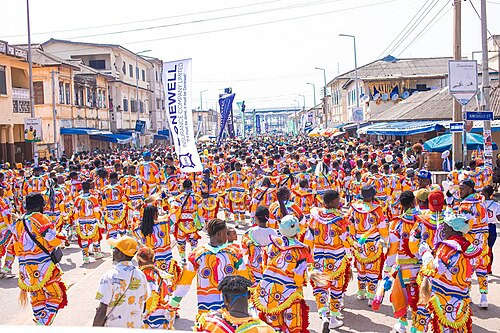
The National Masqueraders and Fancy-Dress Federation of Ghana is urging the government through the Tourism Ministry and the Ghana Tourism Authority (GTA) to pay attention to their activities since they can create employment.
The Association said they have transformed from a largely community-based practice into a national brand capable of generating revenue, creating jobs, and attracting investment.
There was a release by Rev Asante Daniel Edmund Kofi and Eric Kingsley Ashie who are the Patrons of the Federation, after recently held masquerades and fancy-dress in the Western, Central, Greater Accra and Ashanti regions.
Ghana’s masquerade and fancy-dress traditions have long been celebrated for their vibrancy, creativity, and cultural depth. Yet, for decades, these colourful festivals—flourishing in Winneba, Agona Swedru, Sekondi, Takoradi, Elmina, and Kumasi—have remained largely local in scope, missing an opportunity to become a major economic and tourism engine.
The Federation represents a strategic leap for Ghana’s entertainment and cultural sector, creating a national platform to professionalise carnival arts, coordinate performances, and link masquerade culture to tourism, creative industries, and international markets.
At the helm are seasoned leaders, including Mr Edward Kwafo, Mr Allen Kwafo, Rev. Moses Gyesi, and Mr Emmanuel Okwandaho Mensah, whose decades of experience across Winneba, Swedru, Tema, and Sekondi-Takoradi lend credibility and organisational discipline to the Federation.
Their leadership is bolstered by support from traditional authorities like Neenyi Ghartey VII and Osae Nyampong VI (Effutu Traditional Area) and political champions such as MP Alexander Afenyo-Markin, whose participation in parades over the years underscores a growing public-private partnership model for cultural development.
The Federation’s vision positions Ghanaian masquerade culture as a full-fledged creative economy sector, linking costume design, choreography, music, event production, and youth training with tourism and entertainment revenue streams.
The patrons said “Local artisans, tailors, musicians, and performers now have a national platform to monetise talent, access sponsorship, and scale performances to regional and international stages”.
“Tourism stands to gain significantly. By packaging festivals with professional storytelling, ticketed experiences, and curated parade routes, the masquerade tradition can attract domestic and international visitors, boosting hospitality, transport, and local business revenues. The potential ripple effect includes hotel bookings in Sekondi, Takoradi, and Elmina; restaurant patronage in Winneba and Swedru; and cultural tour engagements in Kumasi”.
Global Exposure and Cultural Diplomacy
The Federation also intends to connect Ghana’s carnival culture with international markets by participating in globally recognised events, including Notting Hill Carnival (UK) – Europe’s largest street festival, ideal for showcasing Ghanaian performance arts and costume excellence; Caribbean Carnival (Toronto, Canada) – targeting the North American market and diaspora communities; and Trinidad and Tobago Carnival – sharing techniques, costume innovations, and performance styles at the world’s premier carnival. ”.
The rest, according to the federation, are Dominican Republic Carnival (Santo Domingo, 2026) – Strengthening African-Caribbean heritage links and Rio Carnival (Brazil) – Offering cross-cultural creative exchanges and exposure to international audiences.”
Participation in these events is not only about cultural exchange; it represents business and tourism opportunities, attracting sponsorship, media coverage, and potential partnerships with event organisers and cultural institutions.
Economic, Employment, and Youth Opportunities
The Association said, “By leveraging Ghana’s masquerade culture, the Federation is creating jobs and entrepreneurial pathways. Tailors and costume designers gain international contracts, choreographers and musicians earn performance fees, and young people acquire skills in event management, stage production, and cultural entrepreneurship. Communities in Sekondi-Takoradi, Swedru, Elmina, Winneba, and Kumasi benefit directly from festival-driven commerce, hospitality services, and informal tourism activities”.
A Unified National and International Brand
The Federation said it “unifies local traditions—from Sekondi-Takoradi’s regimented formations to Swedru’s competitive artistry, Winneba’s historic parades, Elmina’s heritage-rich performances, and Kumasi’s urban innovations—into a marketable national brand capable of domestic monetisation and international licensing”.
“With strong leadership, traditional patronage, political backing, and strategic international participation, Ghanaian masquerade is poised to become a major player in Africa’s creative economy, combining cultural authenticity with professional business practices.”