

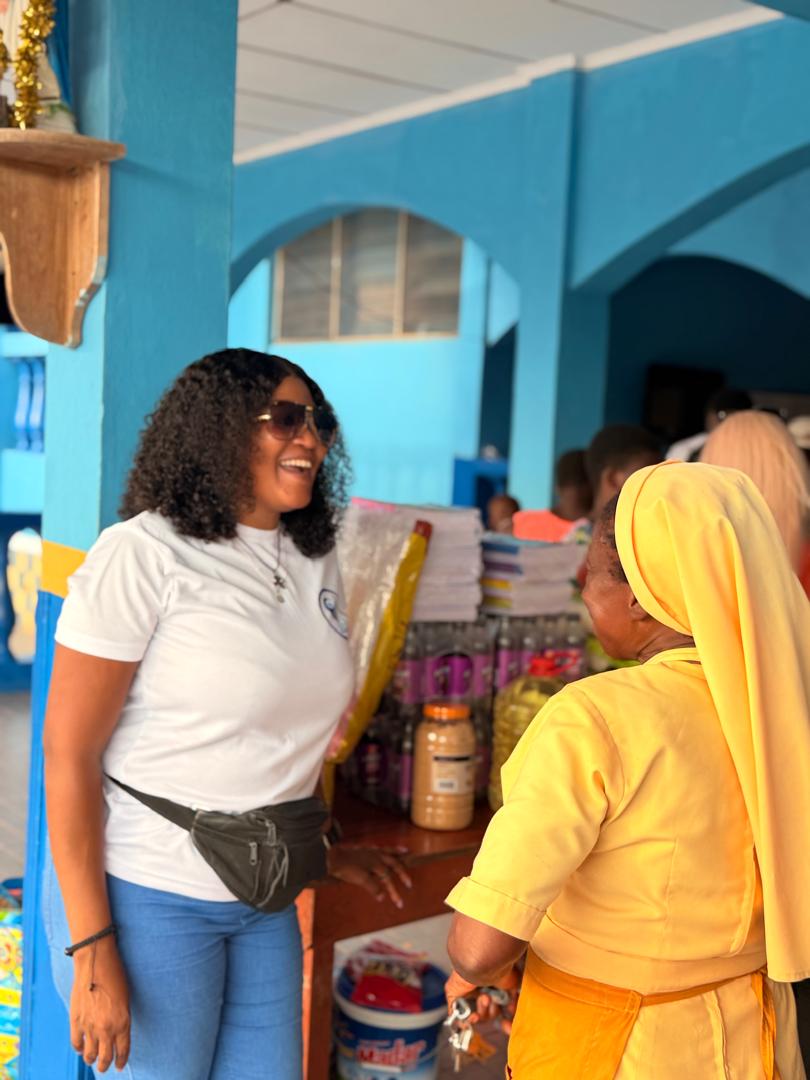
Ghanaian actress Mary Awuni, a.k.a Lady 1, has celebrated her birthday in a meaningful way by spending the day with children at the Egyam Children’s Home, where she donated items and shared moments of joy with the residents.
The gesture, carried out in collaboration with the Lady1 Foundation, forms part of what the actress describes as a personal commitment to give back to society each year on her birthday.
“I am making it a point to do donations on my birthday each year,” she said in an interview, expressing excitement about continuing the initiative. “This year we are donating to the Egyam Children’s Home to spread love and joy, make unforgettable memories with the kids, and truly make a difference in their lives.”
According to her, the outreach is not only about material support but also about emotional connection. “We are on a mission to spread joy and kindness… giving back to society is the best thing ever, and you can never count your blessings when you show this kind of kindness,” she added.
Beyond Celebration: A Growing Culture of Purposeful Giving
Mary Awuni’s actions reflect a broader trend among public figures who are increasingly using personal milestones as opportunities for social impact. Rather than hosting lavish celebrations, many are redirecting resources toward vulnerable communities, particularly children in orphanages who often lack consistent family support systems.
Children’s homes such as Egyam provide shelter, education, and care for vulnerable and orphaned children, but they frequently rely on donations from individuals, NGOs, and corporate bodies to meet daily needs. These needs range from food, clothing, and healthcare to educational materials and recreational resources.
Why Donations to Children’s Homes Matter
Experts and child welfare advocates emphasize that donations to orphanages go far beyond charity—they play a critical role in child development and social inclusion:
1. Meeting Basic Needs
Regular donations help ensure that children have access to essentials such as nutritious food, clean water, clothing, and medical care. In many cases, these contributions bridge funding gaps that institutions struggle to cover.
2. Supporting Education and Future Opportunities
Educational materials, school fees, and mentorship programs funded through donations give children a better chance at breaking the cycle of poverty and becoming self-reliant adults.
3. Emotional and Psychological Well-being
Visits like Awuni’s offer more than gifts—they provide companionship, attention, and a sense of belonging. For children without stable family structures, these interactions can significantly boost confidence and emotional health.
4. Encouraging Social Responsibility
Public acts of giving inspire others to contribute, creating a ripple effect across society. When influential figures champion such causes, they help normalize generosity and civic responsibility.
Inspiring a Movement of Kindness
Through her initiative with the Lady1 Foundation, Mary Awuni is positioning herself not only as an entertainer but also as a role model for social impact. Her message underscores a simple but powerful idea: acts of kindness, no matter how small, can transform lives.
As Ghana continues to address social welfare challenges, such gestures highlight the importance of collective responsibility in supporting vulnerable groups. For many of the children at the Egyam Children’s Home, the visit was more than a donation—it was a reminder that they are seen, valued, and not alone.