

In the heart of Ghana’s mineral-rich Western Region, a quiet transformation is taking shape — one that government officials and development partners believe could redefine the future of artisanal and small-scale mining across the country.
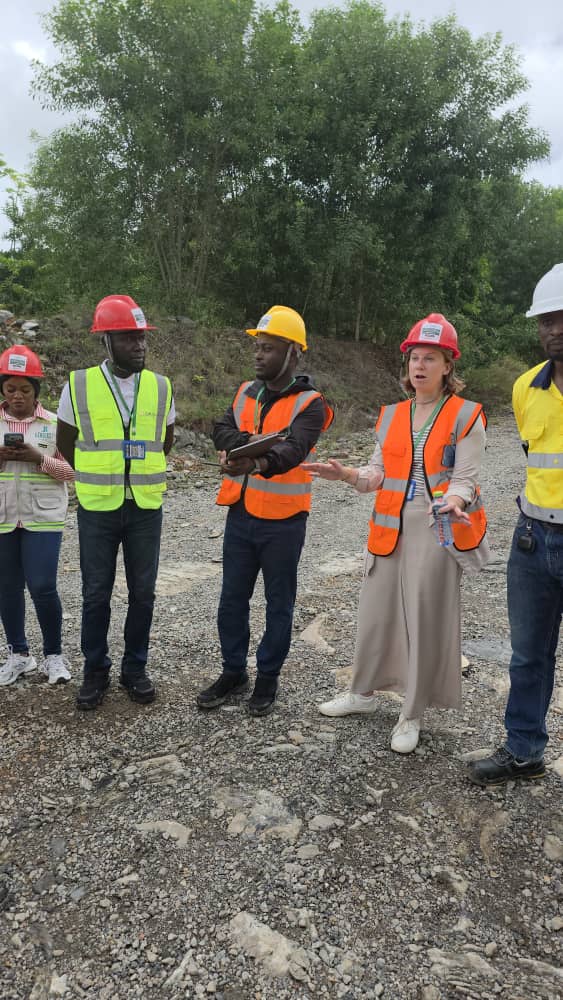
That transformation came under international spotlight when a delegation from the World Bank Group paid a working visit to the Anwiah–Teleku–Bokazo Cooperative Mining Site in the Ellembele Municipality to inspect and assess Ghana’s ongoing efforts toward formalising the artisanal and small-scale mining sector.
The visit formed part of the World Bank’s broader interest in supporting initiatives that promote responsible, sustainable, and community-centered mining practices within developing economies heavily dependent on natural resources.
For years, Ghana’s artisanal and small-scale mining industry has remained both an economic lifeline and a national challenge, providing livelihoods for thousands while simultaneously raising concerns over environmental degradation, unsafe operations, illegal mining, and child labour.
Against this backdrop, the cooperative mining initiative at Anwiah–Teleku–Bokazo is increasingly being viewed as a model for reform — one designed to align mineral extraction with safety, environmental stewardship, and economic inclusion.
The World Bank delegation’s inspection tour offered an opportunity for stakeholders to examine firsthand how the government’s formalisation strategy is being implemented on the ground.
Officials observed operational procedures, interacted with miners and community leaders, and evaluated compliance with key regulatory and occupational safety standards guiding responsible mining activities.
Particular attention was given to measures aimed at preventing child labour, improving worker safety, promoting environmental sustainability, and ensuring that mining activities comply with national regulations.
The delegation comprised representatives from rCOMSDEP, the World Bank Group, the Ministry of Lands and Natural Resources, the Ghana Landscape Restoration and Small-Scale Mining Project, the Environmental Protection Authority, and traditional authorities from the host communities.
Their collective presence underscored the growing recognition that sustainable mining governance requires collaboration between government institutions, development agencies, regulators, local communities, and traditional leadership structures.
Throughout the visit, discussions reportedly centered on how Ghana can strengthen cooperative mining systems to create lawful employment opportunities while reducing the destructive impact of illegal mining operations.
Stakeholders also explored ways of deepening institutional partnerships to ensure long-term sustainability within the sector.
The cooperative mining framework is part of a broader national strategy aimed at transforming small-scale mining from a largely informal activity into a structured and regulated economic enterprise capable of contributing meaningfully to national development.
Government officials believe formalisation remains one of the strongest tools available in the fight against illegal mining, commonly referred to in Ghana as “galamsey.”
Over the years, illegal mining has severely affected rivers, forests, farmlands, and local ecosystems, triggering public concern and national debate over the environmental cost of unregulated mineral extraction.
At the Anwiah–Teleku–Bokazo site, however, officials say the emphasis is being placed on responsible extraction methods that prioritize environmental protection alongside economic opportunity.
“Responsible mining is about balancing livelihoods with environmental protection and community safety,” one official familiar with the initiative stated during the inspection.
“It is possible to create economic opportunities within the mining sector without compromising the health of communities and the future of our natural resources,” the official added.
Observers say the involvement of the World Bank could provide significant momentum for Ghana’s efforts to reposition its artisanal and small-scale mining industry within internationally accepted sustainability standards.
The World Bank has increasingly shown interest in supporting projects that integrate environmental restoration, social protection, and economic empowerment within extractive industries across Africa.
The Ghana Landscape Restoration and Small-Scale Mining Project, which participated in the inspection exercise, is among initiatives seeking to address the environmental impact of mining while promoting land rehabilitation and sustainable resource management.
Officials from the Environmental Protection Authority also emphasized the importance of continuous monitoring and regulatory enforcement to ensure that mining activities do not threaten surrounding communities and water bodies.
Traditional leaders who joined the delegation used the occasion to advocate stronger community participation in mining governance and local development planning.
For many local residents, the success of cooperative mining initiatives represents more than policy reform; it reflects hope for safer jobs, stable incomes, improved infrastructure, and greater environmental accountability.
Miners operating within the cooperative structure reportedly welcomed the growing engagement from international institutions and government agencies, describing it as a sign of confidence in the future of responsible small-scale mining.
Industry analysts note that Ghana’s approach could become an important reference point for other African countries grappling with the challenge of balancing mineral wealth with environmental sustainability.
They argue that formalisation, technical support, skills development, and access to financing remain critical to the long-term success of cooperative mining systems.
At the same time, experts caution that reforms must remain inclusive and community-driven to avoid excluding vulnerable miners who depend on the sector for survival.
The role of rCOMSDEP in coordinating partnerships and promoting responsible mining practices was widely acknowledged during the visit.
Officials reiterated the organization’s commitment to advancing a formalized, responsible, and sustainable small-scale mining sector capable of generating opportunities while safeguarding communities and the environment.
The inspection exercise also highlighted the increasing global demand for responsibly sourced minerals as investors and international markets place greater emphasis on environmental, social, and governance standards.
For Ghana, the visit represented more than a diplomatic engagement; it symbolized growing international confidence in the country’s determination to reform one of its most challenging sectors.
And within the mining communities of Anwiah, Teleku, and Bokazo, the message emerging from the visit was unmistakable — that the future of mining must not only generate wealth, but also preserve dignity, protect ecosystems, and secure sustainable livelihoods for generations to come.
Powerful Pull Quotes
“Responsible mining is about balancing livelihoods with environmental protection and community safety.”
“Formalisation remains one of the strongest tools in the fight against illegal mining.”
“The future of mining must generate opportunity without destroying communities and ecosystems.”