

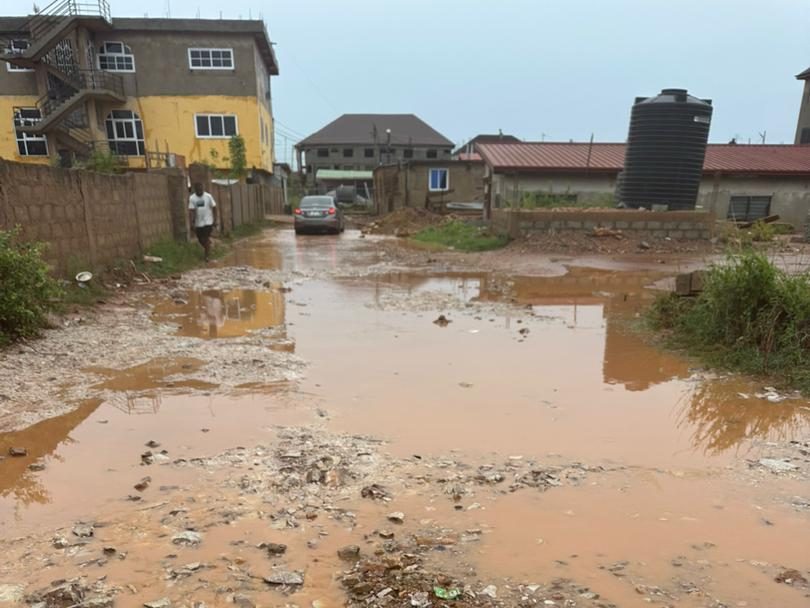
…Residents Urge Action As Waterways Filled Rapidly
Residents of Otojor jonkobri, now called new Dansoman a community known for its relative tranquility, are sounding the alarm over increasing flooding incidents attributed to recent developmental activities.
For years, the area has remained largely unaffected by floods, but the recent encroachment on natural waterways by developers has changed that.
The situation has escalated, leading to significant flooding during rainfalls, with residents witnessing the destruction of property and livelihoods. Notably, the Mallam market, previously shielded from such calamities, has experienced severe damage, with many foodstuffs ruined.
A concerned resident, Mrs. Mary Doodo, a 65-year-old woman who has lived in Dansoman for several years, expressed her frustration: “We never had flooding issues here until developers started filling the waterways. This is not just a minor inconvenience; it’s destroying our homes and businesses.”
Residents are calling on President Nana Akufo-Addo to intervene by urging the Municipal Chief Executive (MCE) to take immediate action. They are demanding the demolition of structures built on waterways to restore the natural flow of water and prevent future flooding.
“The government needs to prioritize the safety and wellbeing of its citizens. We want our peace back,” she added.
During this rainy season, the community remains on high alert, hoping for swift action to mitigate the impacts of flooding. Local leaders are rallying support, emphasizing the urgent need for a sustainable solution to protect Dansoman from further devastation.
Residents are determined to advocate for their rights, urging the government to listen to their pleas before it’s too late.
The residents point to a hard truth that often gets overlooked in the rush to assign blame: the flood problem isn’t only about a single waste site. While waste disposal plays a role in urban cleanliness and drainage, the core issue lies with encroachments and structures that obstruct water flows along waterways. When buildings, fences, and other barriers crowd drainage corridors, water has nowhere to go during heavy rains, backing up and spilling onto streets and homes.
Authorities should therefore look beyond blame and take decisive, evidence-based action. Pulling down structures that encroach on water ways especially those that narrow channels or block culverts can restore the natural capacity of the drainage system. This must be paired with robust, transparent urban planning: enforcing setback rules, relocating squatters where feasible and humane, and investing in mainstreaming proper waste management so the drainage system remains free of litter and debris.
Interventions should be community-informed and data-driven. Before any demolition, there should be clear maps of watercourses, risk assessments, and a plan that prioritizes the safety and livelihoods of affected the communities.