

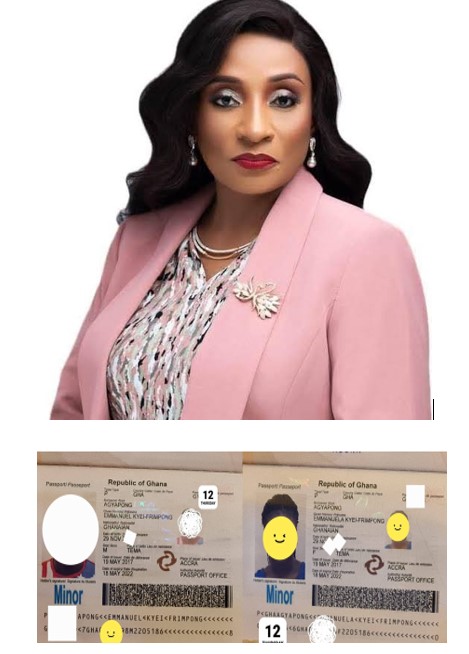
The controversy over scholarship awards granted to minors and Ghanaian twins based in Canada has taken a new turn after the Ghana Scholarship Authority publicly defended the awards while Sabah Zita Benson, whose allegations helped ignite the debate, has yet to respond to the Authority’s detailed rebuttal.
The dispute erupted after documents circulated online suggesting that scholarships had been awarded to minors, with critics questioning whether the awards were consistent with the Authority’s mandate and eligibility requirements.
In response, the Ghana Scholarship Authority rejected allegations that the beneficiaries were Canadian citizens or that the scholarships had been awarded unlawfully.
Acting Registrar Alex Kwaku Asafo-Agyei said the beneficiaries were Ghanaian citizens by birth and parentage, stressing that Ghanaian citizenship is the fundamental eligibility requirement for scholarships administered by the Authority.
“The individuals being referenced are Ghanaians by birth and parentage. The fundamental eligibility requirement for scholarships administered by the Ghana Scholarship Authority is Ghanaian citizenship. That requirement has been satisfied in this case,” he said.
The Authority also challenged claims that government scholarships are reserved exclusively for “needy but brilliant” students.
According to Mr. Asafo-Agyei, the Authority operates a three-tier scholarship framework that includes Financial Need, National Priority, and Merit-Based Selection, with scholarships awarded under different policy objectives.
He said public commentary had created the misleading impression that beneficiaries who did not fall within the “needy but brilliant” category were automatically ineligible.
To reinforce the point, the Acting Registrar disclosed that 5,000 local scholarships have been earmarked for the 2026 scholarship cycle, with 2,000 specifically reserved for the “needy but brilliant” category, while the remaining scholarships fall under other approved categories.
The Authority maintained that the awards under discussion complied with its established scholarship framework and that the beneficiaries met the applicable eligibility requirements.
However, while the Authority has publicly outlined its position, Sabah Zita Benson has not publicly responded to the specific explanations provided regarding the beneficiaries’ citizenship status and the three-tier scholarship framework.
The silence has left the debate unresolved, with public attention now shifting from the initial allegations to the competing explanations surrounding the administration of scholarships awarded in 2025.
The controversy continues to fuel broader questions about transparency, scholarship eligibility, and the oversight of public scholarship programmes in Ghana.