

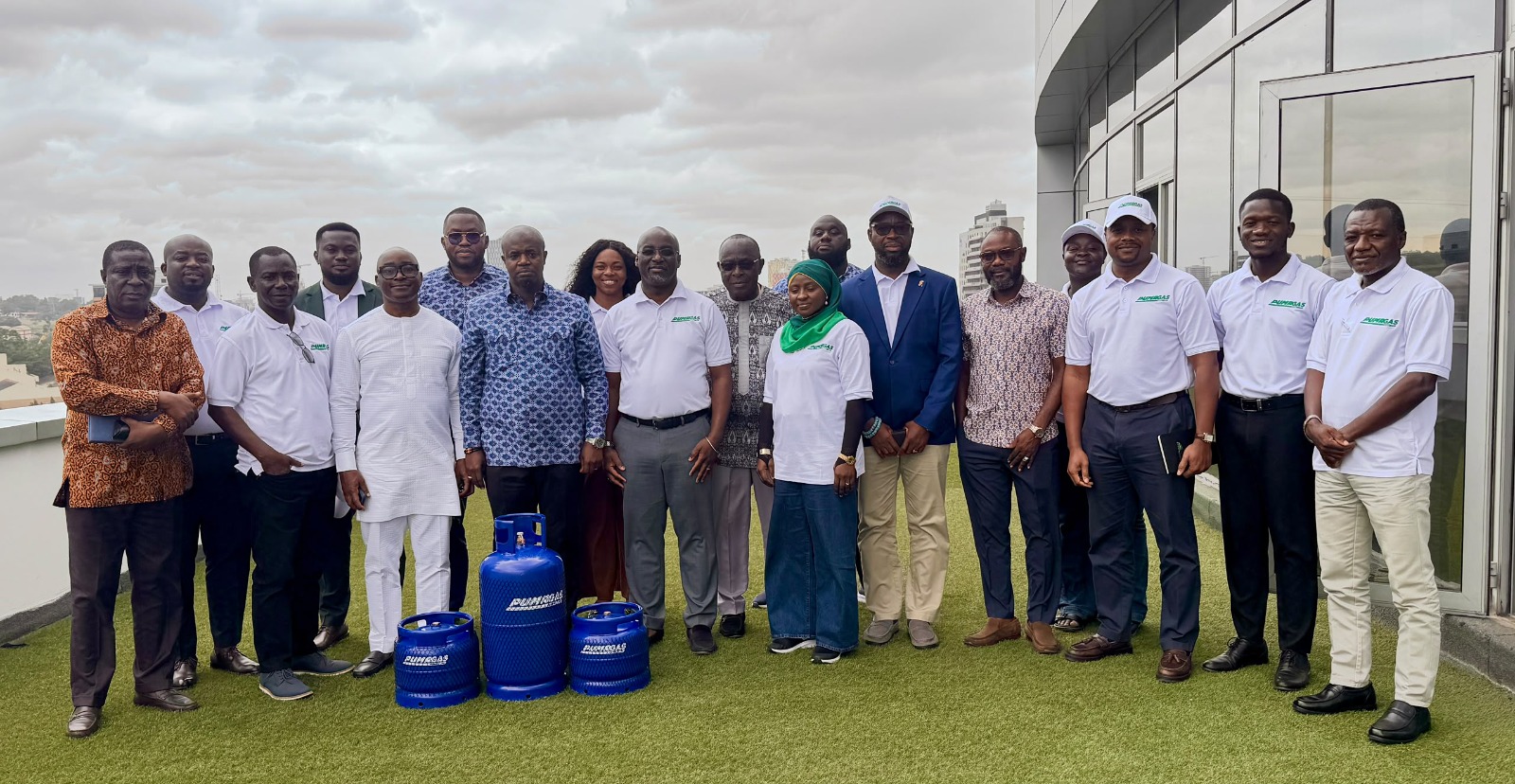
CRM Alliance Targets Households While Strengthening Ghana’s LPG Value Chain
As the Government advances its goal to reach 50% Liquefied Petroleum Gas (LPG) penetration by 2030 through the Cylinder Recirculation Model (CRM), Puma Energy Ghana, a global downstream energy company, has formalised a partnership with five local LPG distributors. This collaboration aims to significantly progress the country’s objective of making LPG more accessible.
The agreements, signed in Accra, establish collaborations between Puma Energy, Earth Energy, Sandhill Oil and Gas, Riet Company Ltd, Hamcom and StepGas. The initiative seeks to strengthen Ghana’s CRM by shifting from traditional fuel station distribution to a more decentralised, neighbourhood oriented retail network that delivers clean cooking solutions directly to consumers.
Key industry figures, government representatives and community leaders highlighted the importance of this collaboration, convening to witness a model showing promising potential for large scale viability.
At the core of this partnership is Puma Energy’s “3y3 Good Exchange” initiative, which enables customers to exchange old cylinders for new, safe and approved cylinders at no cost. This is designed to replace barriers and remove safe and affordable LPG access. This initiative will not only improve indoor air quality for households but also establish a more reliable and professionally managed distribution channels.
“We are introducing a new distribution philosophy today, bringing safe and affordable energy closer to Ghanaians,” stated Lanzeni Coulibaly, General Manager of Puma Energy Ghana. “This initiative marks a significant step forward and we are leveraging our capabilities to support the government’s goal of achieving 50% LPG penetration by 2030.”
Mr. Godwin Kudzo Tameklo, Chief Executive Officer of the National Petroleum Authority (NPA), highlighted the importance of strong collaboration between the regulator and industry. He underscored the value of a close partnership between Puma Energy Ghana and the NPA, stating: “Our objective is to cultivate an atmosphere of mutual respect that directly supports the growth of the Ghanaian economy.”
The safety-focused CRM allows consumers to exchange empty cylinders for pre-filled, safety-verified cylinders, thereby enhancing the convenience, reliability, and safety of LPG usage. By integrating these five distributors into Puma Energy’s supply chain, the partnership improves reach to the final consumer and increases access to clean cooking for more households, especially in peri-urban and rural areas where access has been historically limited.
The health benefits of this transition are considerable. The Air Quality Life Index (AQLI) 2025 report estimates that poor air quality reduces the average Ghanaian’s life expectancy by nearly 0.8 years. Household air pollution from solid fuels remains a major environmental health risk, disproportionately affecting women and children. Accelerating LPG adoption contributes to better public health outcomes and supports forest conservation through the reduction of deforestation.
“Clean cooking should be accessible to all families,” Coulibaly added. “Through this partnership, we are making it easier for households to obtain safer, cleaner LPG while assisting local distributors in expanding responsibly and serving more communities.”
Puma Energy Ghana also plans an ambitious growth strategy to significantly expand its cylinder fleet. From July to September 2026, over 40,000 new, NPA-compliant cylinders will be introduced, nearly tripling the company’s initial capacity of 24,000 cylinders. This is a key part of a multi-million-dollar investment programme aimed at scaling the fleet to 300,000 cylinders within the next two years, which equates to serving 30,000 local communities.
This nationwide expansion is driven by the commitment and local expertise of the five newly chosen distributors, all of whom are 100% Ghanaian-owned enterprises. At the signing ceremony, they expressed their enthusiasm and commitment to this transformative partnership:
Torgbigah Adamah III, representing StepGas Ltd., shared: “For years, we have observed LPG distribution from the sidelines. Today, Puma Energy has equipped us, as Ghanaian entrepreneurs, with the resources, cylinders, and technology to take the lead. We are ready to bring safe gas to every neighbourhood in Accra.”
Godwin Tamakloe of Riet Company Limited emphasised the importance of accountability: “For us, this partnership is about building confidence and ensuring that we deliver a safe and reliable service to our customers. This is not merely a business venture; it is about contributing to the safety and wellbeing of our communities.”
Ben Berko of Earth Energy elaborated on the collaborative synergy: “This structure is innovative because Puma handles the significant capital investment (the fleet and the plant) while we contribute local knowledge. This is how national policy is effectively advanced.”
Hamidu Mohammed, representing Hamcom 8 Ltd. from Kumasi, spoke about the widespread demand: “In Kumasi, the demand for clean cooking is substantial. With Puma’s commitment to increasing cylinder availability, we anticipate fewer shortages. As a result, this will create jobs and bring gas closer to the families who need it most.”
Abdulrazak Ibrahim of Sandhill Oil and Gas highlighted the practical support: “With Puma Energy’s technical and logistical assistance, we can extend safe LPG access to more communities and help more families transition away from polluting fuels.”
“Energy security and safety must be intrinsically linked,” Coulibaly concluded. “By collaborating with these five distributors, we are contributing to a more robust LPG value chain, providing Ghanaian homes and businesses with confidence in the safety, quality, and reliability of their supply.”
Puma Energy’s commitment to expanding access to safe and reliable LPG in communities across Ghana goes beyond supporting the country’s sustainable energy transition. It is also about strengthening the long term sustainability and resilience of the communities we serve. Through this partnership with 100% Ghanaian-owned businesses, Puma Energy is supporting local enterprise while helping communities access a safer and more reliable energy solution. This reflects Puma Energy’s purpose of “Energising Communities” creating value not only through the energy we provide, but through the communities and local partnerships we help strengthen.