

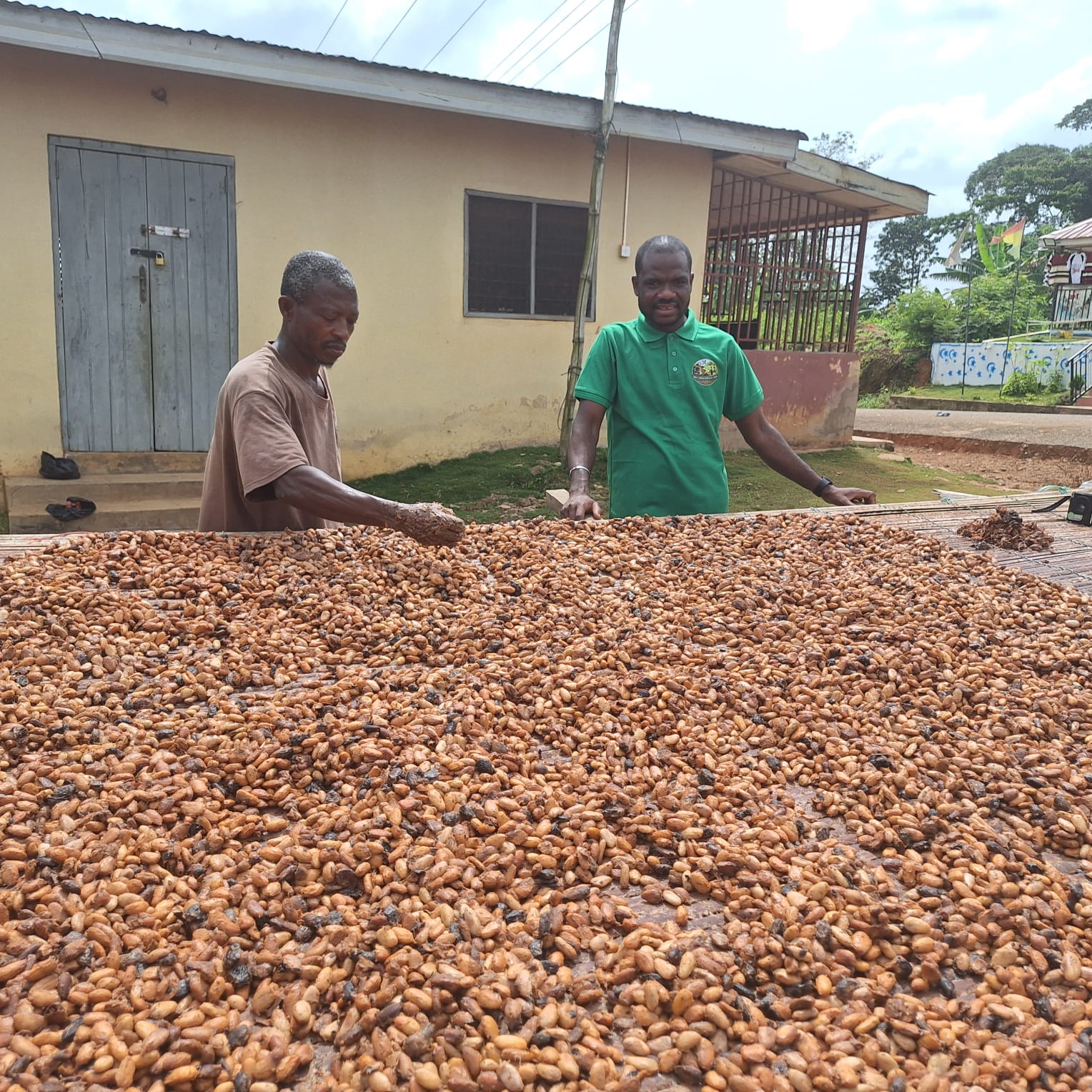
A new field study by Save the Mining Communities-Ghana (SMC-GH), a national non-governmental organization working in mining-affected communities, has uncovered a sharp rise in the number of cocoa farmers selling their farms to illegal miners, commonly known as galamseyers in Ghana’s Eastern Region.
Presenting the findings to stakeholders, Mr. Andrews Kwame Perprem, Lead Researcher and Founder of Save the Mining Communities-Ghana, revealed that the research conducted between November 2025 and mid-March 2026 found that nearly 80 farmers across seven communities had either sold entire cocoa farms or portions of their land to illegal mining operators. The report highlights a growing and dangerous shift away from cocoa farming, driven by economic hardship, delayed payments, and declining producer prices.
Lucrative Deals Driving Farm Sales
According to the study, farmers received between GH¢40,000 and GH¢170,000 per acre for their lands. The price varied depending on the age and productivity of cocoa trees, the perceived presence of gold deposits, and the bargaining power of the farmers.
In several instances, farmers chose not to sell outright but instead entered into profit-sharing arrangements locally referred to as “load.” Under this system, miners take full responsibility for operational costs and retain 70% of the gold-bearing soil extracted, while farmers receive 30%. This option is often preferred by farmers who believe their lands are rich in gold.
Economic Pressures Pushing Farmers to Sell
Interviews conducted during the study reveal that many farmers now consider selling their cocoa farms to galamseyers more profitable than maintaining them. Farmers cited the long maturation period of cocoa typically 5 to 7 years as well as the high cost of labour and farm maintenance.
Many explained that they personally finance land clearing, transportation of seedlings, planting, and continuous farm upkeep. These challenges are compounded by delays in payments for cocoa beans. Several farmers reported that they have not been paid since November 2025, with some arrears dating back to October.
A farmer from Adiembra in the Abuakwa South Municipality, identified as Akwasi Mensah (name withheld), captured the frustration shared by many:
“Why wouldn’t I sell my cocoa farm to the miners? The government is unable to pay me, and the price has also been reduced drastically.”
He was referring to the recent drop in the producer price from GH¢3,625 to GH¢2,587 per 64kg bag, an adjustment that has significantly reduced farmers’ incomes.
Debt, Survival, and Shifting Livelihoods
The study further revealed that most affected farmers are smallholders who depend solely on cocoa for survival. Previously, they relied on credit from cocoa purchasing clerks to sustain themselves during the lean season, repaying these loans after the main harvest season.
However, with delayed payments and reduced income, many farmers have fallen into debt. Selling their cocoa farms has become a survival strategy, allowing them to repay loans and meet immediate financial needs.
Some farmers have invested proceeds from these sales into alternative livelihoods, including purchasing motorbikes to operate as transport services for miners, opening drinking spots, or engaging in petty trading. Despite these efforts, many expressed concerns about the sustainability of these ventures due to limited business management skills.
A Looming National Crisis
Save the Mining Communities-Ghana warns that the increasing sale of cocoa farms to illegal miners poses severe long-term consequences. The rapid conversion of cocoa farms into mining sites threatens to significantly reduce cocoa production one of Ghana’s leading export sectors and a key source of foreign exchange.
Additionally, environmental degradation caused by illegal mining including soil destruction and water pollution risks rendering vast areas of land unsuitable for agriculture, raising concerns about future food security in affected communities.
“There is an urgent need for government intervention,” said Mr. Andrews Perprem, Founder and Chief Executive Officer of Save the Mining Communities-Ghana. “If this trend continues, we risk not only the collapse of cocoa farming in these communities but also a deepening cycle of poverty and environmental destruction.”
Call for Urgent Action
The organization is calling on policymakers, COCOBOD, and other stakeholders to urgently address the underlying issues pushing farmers toward illegal mining. Key recommendations include ensuring timely payment to farmers, maintaining fair producer prices, improving access to affordable credit, and intensifying the fight against illegal mining.
As Ghana confronts the dual challenge of protecting its cocoa industry and curbing illegal mining, the findings of this study serve as a stark warning: the increasing sale of cocoa farms to galamseyers could have irreversible consequences for the country’s economy and rural livelihoods if immediate action is not taken.