

Story By Nii Okpoti Odamtten / Muhammed Faisal Mustapha
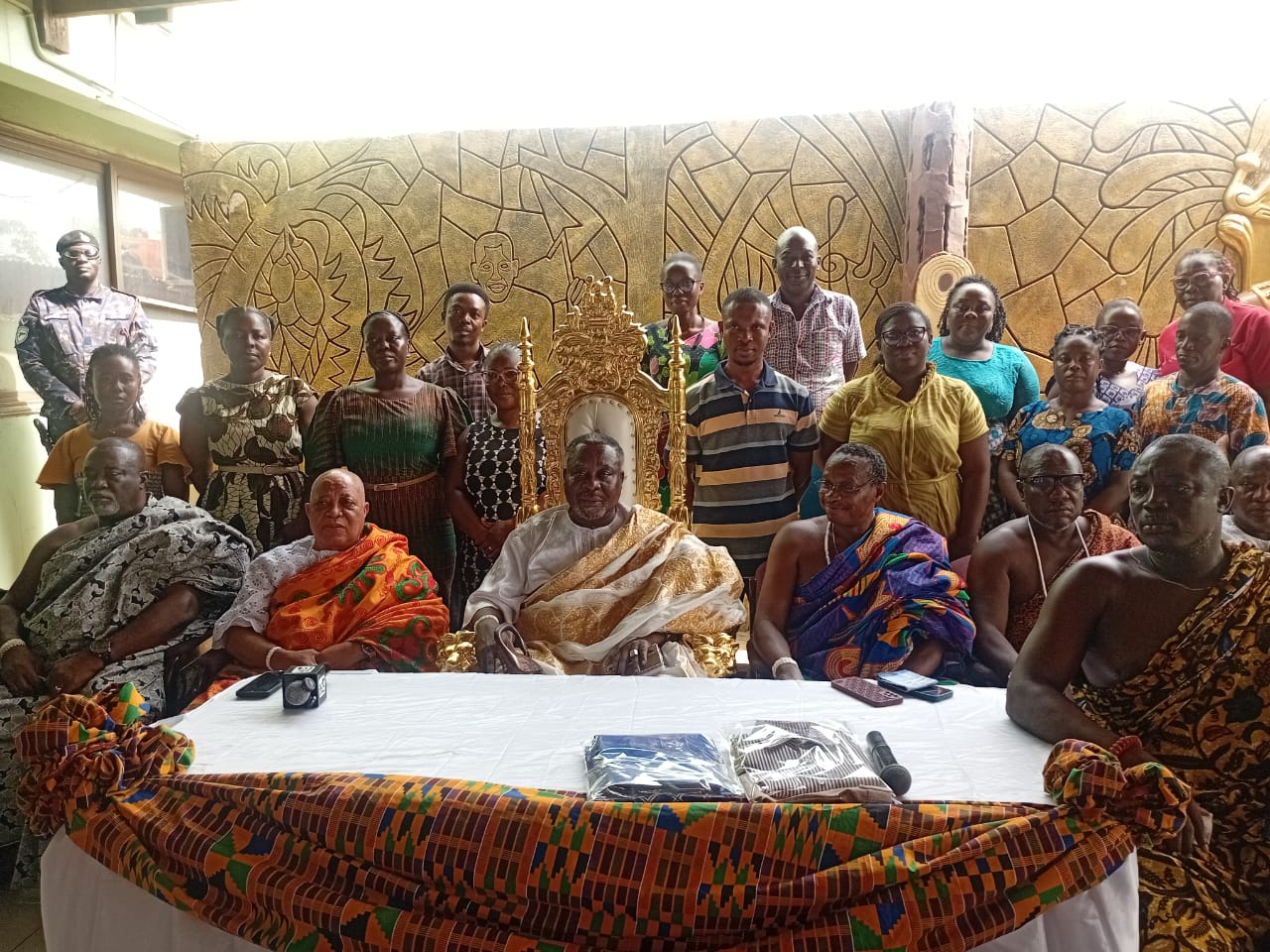
His Royal Majesty Oboade Nortse King Professor Odaifio Welentsi III, the Nungua Mantse, has launched the Nungua Mantse Free School Uniform Programme, a flagship educational intervention aimed at improving school attendance and reducing dropout rates within the Krowor Municipality of the Greater Accra Region.
The initiative, which targets needy pupils within the Nungua Traditional Area, seeks to eliminate the persistent challenge of absenteeism linked to the lack of school uniforms an issue that continues to undermine basic education outcomes in many urban communities.
Speaking at the official launch held at the forecourt of the Nungua Palace, the traditional ruler explained that the programme was inspired by his routine encounter with school children whose education was threatened by inadequate or worn-out uniforms.
“Too many children are kept out of school simply because they do not have uniforms,” the Nungua Mantse observed.
“This is an unacceptable barrier to education, and it is one we can and must remove.”
According to King Welentsi, the absence of proper school uniforms has quietly become a significant driver of truancy and school dropouts across the municipality. He noted that many pupils stay away from school not out of indiscipline, but out of embarrassment and exclusion.
“When a child cannot attend school because of clothing, we are denying that child a future,” he said.
“Education must never be a privilege reserved for only those who can afford it.”
He urged teachers to demonstrate compassion and professionalism in dealing with pupils, stressing that educators play a critical role not only in academic instruction but also in shaping character and civic responsibility.
The Nungua Mantse issued a firm caution against discrimination in the distribution of the uniforms, insisting that all vulnerable pupils must benefit, regardless of ethnic or cultural background.
Citing educational data available to the palace, he revealed that non Ga-Dangme pupils constitute a majority in several public schools within the Krowor Municipality, underscoring the need for inclusivity in all educational interventions.
“Education knows no ethnicity,” he stated.
“Every child in need deserves support, irrespective of where they come from.”
Beyond the uniform initiative, King Welentsi used the occasion to challenge parents particularly within the Ga-Dangme community to take education more seriously in an increasingly competitive global economy.
He warned that the future would demand higher levels of literacy and certification, even for informal economic activities.
“The day is coming when basic education will be required even for petty trading,” he cautioned.
“Parents must act now and secure their children’s future before that reality arrives.”
The Nungua Mantse highlighted several long term educational and infrastructural projects undertaken by the palace to improve learning conditions and school safety across the municipality. These include:
° Provision of potable water and storage tanks to schools
° Construction of libraries and KVIP sanitation facilities
° Building of a perimeter wall for Nungua Senior High School
° Installation of a modern security gate at the Regional Maritime University
These interventions, he noted, form part of a broader vision to create a safe, dignified, and enabling learning environment for students and teachers alike.
Emphasising discipline as a cornerstone of education, the traditional ruler called on teachers to instil strong moral values in pupils, while urging the Ghana Education Service (GES) to support schools in enforcing discipline responsibly.
To ensure transparency and effectiveness, the Nungua Mantse announced the establishment of a dedicated committee to oversee the implementation of the Free School Uniform Programme.
Speaking on behalf of the education authorities, Mr. Azeriya G. Ayeriga, the Krowor Municipal Education Director, commended the Nungua Mantse for his sustained commitment to education, referencing the successful maiden Teachers’ Prize Ceremony organised with the support of the Nungua Traditional Council on November 27 last year.
“School uniforms go beyond appearance,” Mr. Ayeriga noted.
“They promote discipline, equality, and a strong sense of identity among pupils.”
While assuring the palace of teachers’ dedication to improving learning outcomes, he called for continued collaboration among parents, the Municipal Assembly, traditional authorities, and other stakeholders.
“Teachers cannot solve all challenges alone,” he stressed.
“Education works best when the entire community is involved.”
Representatives of beneficiary schools expressed profound appreciation to the Nungua Mantse and the Traditional Council for the initiative, describing it as timely and transformative. They offered prayers for the continued good health and wisdom of the king and his elders.