

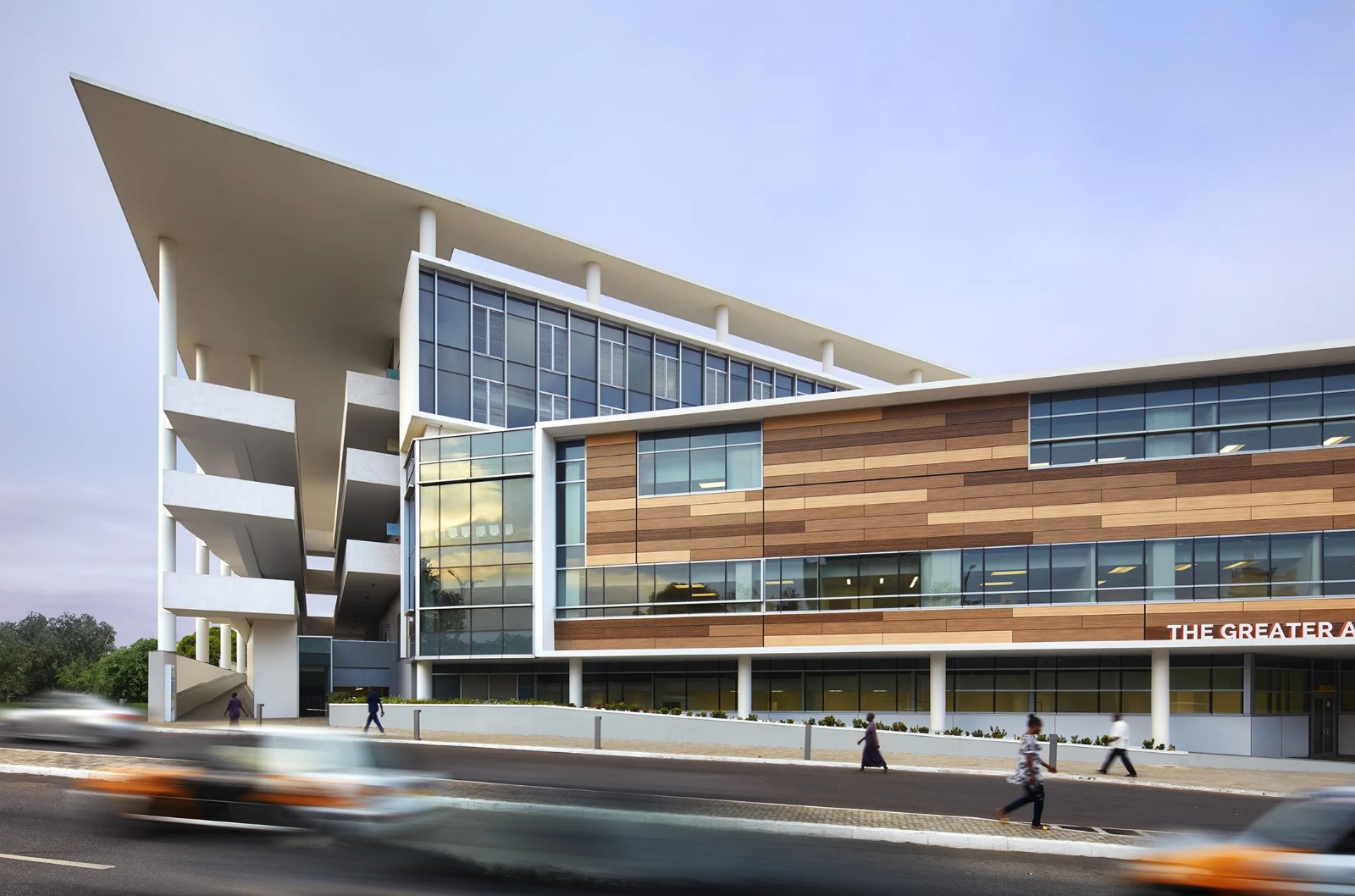
Story By: Nii Okpoti Odamtten / Muhammad Faisal Mustapha…..
The Greater Accra Regional Hospital, widely known as Ridge Hospital, stands today as one of Ghana’s most critical referral health facilities resilient, overstretched, and at a pivotal crossroads. At the helm of this complex institution is Dr. Leslie Issa Adam-Zakariah, Medical Director of the hospital, whose voice reflects both urgency and unwavering commitment as he confronts the growing challenges facing the facility.
In an exclusive interview with Nii Okpoti Odamtten / Muhammad Faisal Mustapha, Dr. Adam-Zakariah opens up about mounting patient pressure, constrained infrastructure, staff attrition, and the hospital’s pressing appeal for donor support while keeping hope firmly alive for the long awaited Phase Two expansion, which he says is no longer a luxury but a necessity.
Originally designed to serve a defined population within the Greater Accra Region, Ridge Hospital now handles patient volumes far beyond its intended capacity. As referrals continue to pour in daily, the hospital’s Phase One infrastructure is under relentless strain.
The Outpatient Department (OPD) alone records over 600 attendees daily, while the emergency unit built with just 20 beds manages more than 80 emergency cases every day, placing enormous strain on staff, space, and resources.
“We are doing the work of two hospitals with the infrastructure of one,”
“The pressure on Phase One is intense clinically, logistically, and emotionally for our staff.”
He explains that Ridge Hospital increasingly absorbs overflow from other facilities, responding to emergencies, specialist care demands, and referrals that cannot be deferred often at great operational cost.
Beyond infrastructure constraints, Dr. Adam-Zakariah highlighted the urgent need for staff accommodation as a critical factor affecting efficiency, availability, and morale among health workers at the hospital.
He noted that many doctors, nurses, and other essential personnel commute long distances daily, a situation that frequently results in lateness, fatigue, and reduced capacity to respond promptly to emergencies.
According to him, providing on-site accommodation would significantly ease commuting stress and reduce travel time, particularly in Accra, where traffic congestion remains a major challenge.
“When health workers are exhausted before their shift even begins, it affects response time, performance, and ultimately patient care,” he noted, stressing that staff housing is no longer optional but essential to sustaining quality service delivery.
At the heart of the hospital’s long term relief strategy lies the proposed Phase Two development, a project that would significantly expand clinical space, improve patient flow, and ease congestion across departments.
“Phase Two is not about expansion for prestige; it is about survival and service quality,” he emphasizes.
“Without it, the system will continue to strain, and patients will feel it first.”
The Medical Director notes that once Phase Two becomes operational, it will dramatically reduce pressure on existing wards, theatres, and outpatient units, restoring dignity to care delivery and improving outcomes.
“Phase Two is not a luxury. It is the oxygen this hospital needs to continue saving lives.”
Despite the overwhelming challenges, Ridge Hospital continues to function largely through Internally Generated Funds (IGF) resources Dr. Adam-Zakariah says are almost entirely consumed by essential medical supplies and maintenance.
“Every cedi we generate internally goes straight back into patient care drugs, consumables, equipment servicing, and facility maintenance,” he explains.
“There is no excess. There is no cushion.”
From oxygen supplies and diagnostic consumables to the maintenance of lifesaving equipment, the hospital’s financial margins are thin, leaving little room for infrastructure upgrades or staff incentives.
Perhaps the most troubling challenge, according to Dr. Adam Zakariah, is the steady loss of well trained medical staff to opportunities abroad a trend that has become increasingly frequent.
“Almost every week, we lose highly skilled professionals doctors, nurses, specialists seeking greener pastures outside the country,” he reveals.
“These are people we have trained, invested in, and relied upon.”
The impact, he says, is profound heavier workloads for remaining staff, longer patient waiting times, and growing pressure on morale.
“The brain drain is not theoretical here we feel it every single week on the hospital floor.”
In the face of these realities, Dr. Adam Zakariah is making a direct and heartfelt appeal to development partners, corporate bodies, philanthropists, and international donors to come to the aid of Ridge Hospital.
“Support for Ridge Hospital is support for Ghana’s public health system,” he states.
“Any donation equipment, infrastructure, training support has a direct and immediate impact on lives.”
He stresses that contributions are not abstract gestures but tangible interventions that strengthen emergency response, maternal care, specialist treatment, and overall service delivery.
Despite the strain, Dr. Adam Zakariah is resolute in his belief that Ridge Hospital’s mission remains intact.
“Our staff continue to show extraordinary dedication under very difficult circumstances,” he says.
“But dedication alone cannot replace beds, buildings, equipment, or personnel.”
As Ghana’s capital continues to grow and health demands rise, the future of Ridge Hospital, he concludes, depends on timely investment, strategic expansion, and collective responsibility.
“We are committed to excellence, but excellence must be supported to survive.”