

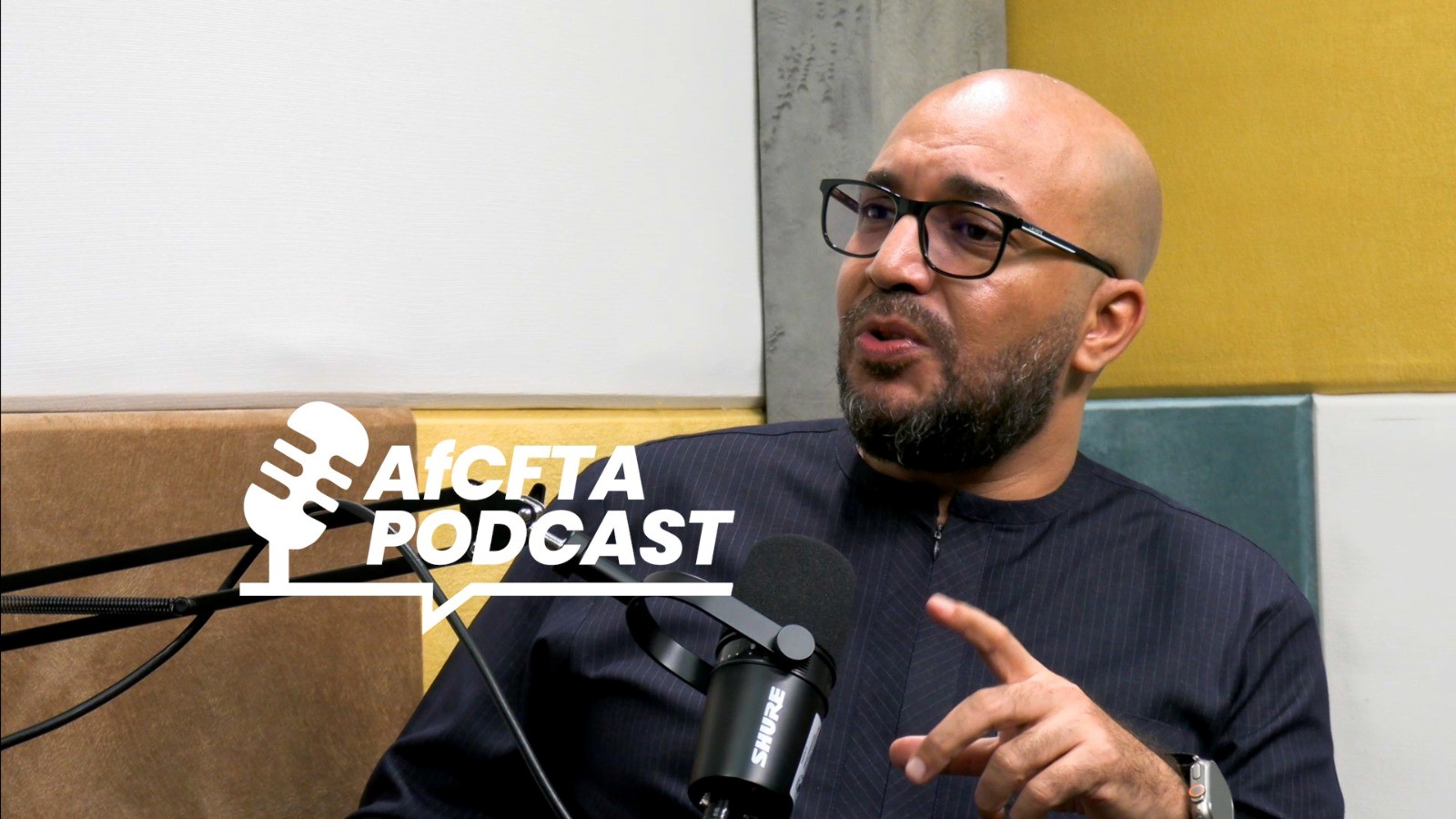
The success of the African Continental Free Trade Area (AfCFTA) will depend not only on reducing trade barriers but also on strengthening regional cooperation, improving trade infrastructure, and creating opportunities for businesses across the continent, according to Mohammed Ali, Director in charge of Trade in Goods of the AfCFTA Secretariat.
Speaking on a recent episode of the AfCFTA Podcast, Director Mohammed Ali highlighted the importance of coordinated policy implementation and collective action among African countries to fully realize the benefits of Africa’s single market. He noted that while the AfCFTA provides the framework for deeper economic integration, its success will ultimately be determined by the commitment of State Parties to establish efficient institutions, modernize trade systems, and facilitate the smooth movement of goods and services across borders.
He emphasized that effective border management and trade facilitation measures remain critical to reducing the cost of doing business, enhancing competitiveness, and attracting investment. According to him, streamlined customs procedures, improved logistics, and efficient transport systems are essential for unlocking the full potential of intra-African trade.
Director Mohammed further stressed the need for sustained collaboration among governments, regional institutions, development partners, and the private sector to address longstanding challenges that continue to hinder trade within Africa. These include infrastructure gaps, regulatory inconsistencies, logistics bottlenecks, and limited industrial capacity in many parts of the continent.
A key focus of the discussion was the role of small and medium-sized enterprises (SMEs), which he described as the backbone of African economies and a critical driver of the AfCFTA agenda. He noted that harmonized payment systems, simplified customs procedures, and effective digital trade frameworks would significantly expand market opportunities for African businesses, particularly those led by women and young entrepreneurs.
The conversation also underscored the growing importance of digital trade and integrated financial systems in accelerating economic transformation. Director Mohammed observed that digital solutions can help businesses overcome geographical barriers, improve efficiency, and connect more easily to markets across the continent, thereby advancing Africa’s broader integration and industrialization goals.
The AfCFTA Podcast continues to serve as an important platform for dialogue among policymakers, experts, businesses, and development partners, helping to deepen public understanding of the Agreement and its transformative potential. Through such engagements, the AfCFTA Secretariat seeks to promote greater awareness, strengthen stakeholder participation, and support the implementation of Africa’s flagship trade initiative aimed at creating a single continental market and fostering sustainable economic development.