

Story By: Muhammed Faisal Mustapha & Felix Ernest Odamtten
The first light of dawn broke over Nungua on Thursday, 23 July 2026, as centuries old traditions came alive in a solemn yet colourful display of culture, spirituality and identity. At the centre of the sacred observance was the Nungua Mantse and President of the Greater Accra Regional House of Chiefs, His Royal Majesty Oboade Notse King Prof. Odaifio Welentsi III, who led thousands of people to the royal ancestral burial grounds to perform the revered rites that form the spiritual climax of the 2026 Kplejoo Festival.
The annual ceremony drew an impressive gathering of traditional rulers, queen mothers, Asafoatsemei, Asafoanyemei, elders, youth groups, security personnel and visitors from across Ghana, underscoring the enduring significance of the Kplejoo Festival as one of the Ga-Dangme people’s most cherished cultural celebrations.
Steeped in generations of tradition, the ancestral rites are performed to honour departed kings and forebears, invoke divine favour through the ancestors, seek protection for the community, pray for peace and prosperity, and ask for abundant harvests and successful fishing seasons. For the people of Nungua, the ceremony represents a living connection between the past, present and future.
Before sunrise, the Paramount Chief, accompanied by his council of elders and traditional warriors, embarked on a solemn procession through the principal streets of Nungua. Young women, traditionally regarded as symbols of purity, carried kpokpoi the sacred meal central to Ga festivals; which would later be ceremonially offered to the ancestors.
As the procession advanced, libation was poured at designated sacred points while ceremonial musket fire echoed across the community. The rhythmic sounds served not only as a public announcement of the King’s movement but also as a spiritual cleansing of the path leading to the ancestral resting place.
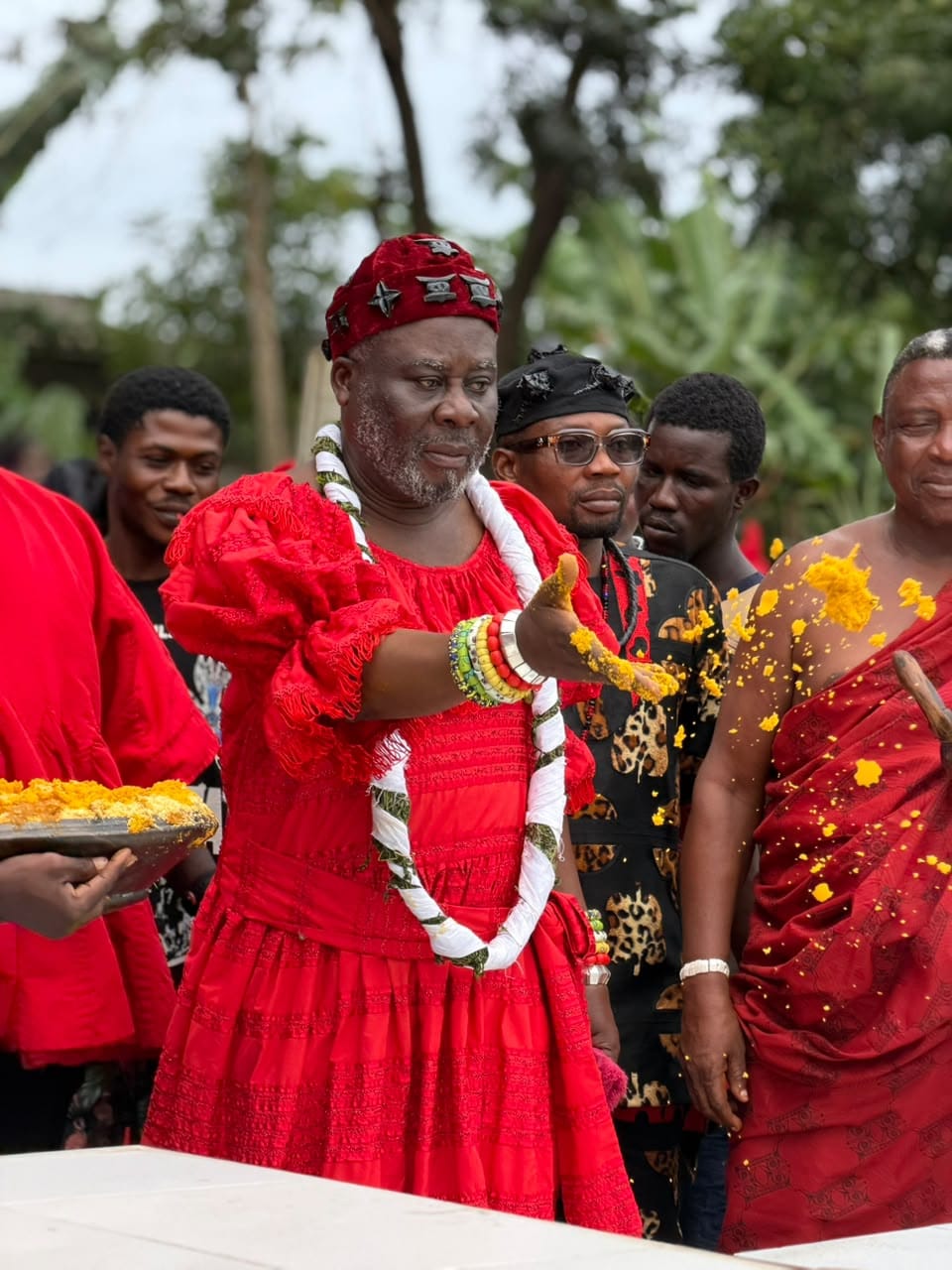
At the royal mausoleum, the atmosphere became deeply reflective as Oboade Notse King Prof. Odaifio Welentsi III moved respectfully from one royal tomb to another, sprinkling kpokpoi upon the graves of departed traditional rulers. The symbolic act reflected the Ga belief that although ancestors have departed physically, they remain spiritually present and continue to watch over their descendants. Similar rites were later performed at another ancestral burial ground near the Bank of Ghana Training School.
Following the sacred observances, the King and his entourage briefly retired to one of the traditional houses, where additional customary rituals were performed before the ceremonial return to the palace. The transition from solemn remembrance to public celebration highlighted the balance between spiritual devotion and communal joy that defines the Kplejoo Festival.
The return journey transformed into a magnificent cultural procession as the Nungua Mantse was carried majestically in an elaborately decorated palanquin through the principal streets of the town. Traditional drumming, chants and songs filled the air while hundreds of residents lined the roads, waving enthusiastically and celebrating the return of their revered traditional ruler.
Elegantly adorned in striking red and black traditional cloth and accompanied by royal guards, Asafoatsemei and Asafoanyemei, the Paramount Chief acknowledged the overwhelming affection of the people with graceful waves before making a regal entrance into the Nungua Palace, bringing the colourful procession to a fitting conclusion.
Explaining the significance of the ceremony, the Nungua Mantse, Oboade Notse King Prof Odaifio Welentsi III revealed that the annual rites have been faithfully observed for generations because the ancestors remain an inseparable part of the community’s spiritual heritage.
“Before libation is poured, we first acknowledge the Almighty God and then invoke the names of our ancestors. Though they are no longer physically with us, we believe they continue to possess spiritual power to guide, protect and bless the community. These rites remind them that they remain part of us and will never be forgotten.”
He explained that kpokpoi occupies a unique place in Ga-Dangme culture and remains central to both the Homowo and Kplejoo festivals. According to him, offering the sacred meal at the graves symbolises sharing the blessings of the harvest with those who laid the foundation for the community’s existence.
“We enjoy kpokpoi in our homes, palaces and family houses during our festivals. It is only right that those who came before us should also receive their symbolic share. By offering it to them, we seek their continued blessings upon our land and our people.”
Beyond its spiritual significance, the ceremony also carried an important social message. Oboade Notse Welentsi III urged residents to embrace reconciliation, strengthen family bonds and preserve unity within Nungua and across the wider Ga-Dangme communities. He stressed that traditional festivals should serve as opportunities to resolve longstanding disputes and reinforce communal harmony.
The Nungua Mantse expressed deep concern over the growing abuse of illicit drugs among young people, describing the trend as one of the most pressing threats confronting society. He called on parents, traditional leaders and community stakeholders to work collectively to safeguard the next generation from destructive influences.
“I appeal to every young person to reject drug abuse because it is destroying lives and threatening the future of our communities. Parents must remain vigilant and guide their children with discipline and love. The leaders of tomorrow are being shaped today, and if we fail them now, the consequences will be borne by the entire nation.”
As the final prayers were offered and the ceremonies concluded, the 2026 Kplejoo Festival once again affirmed the resilience of Ga cultural heritage and the enduring role of traditional leadership in promoting unity, moral responsibility and social cohesion. More than a ritual of remembrance, the ancestral rites stood as a powerful declaration that a people’s identity is strengthened when they honour their history while confronting the challenges of the future with wisdom, peace and collective purpose.