

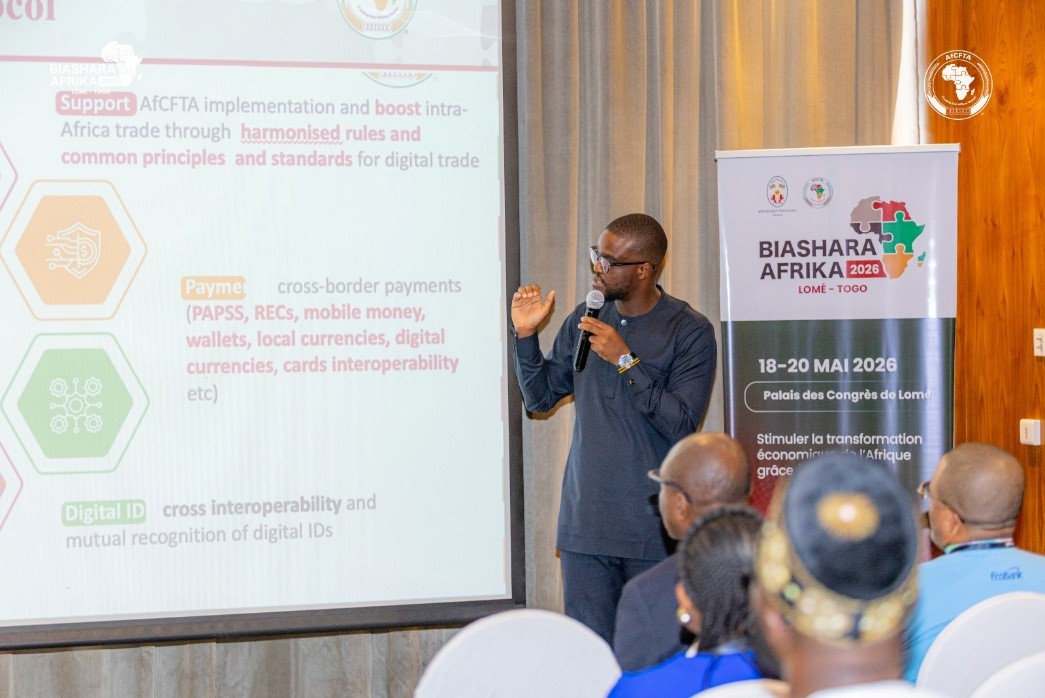
Digital trade took centre stage at the 2026 Biashara Afrika Conference as policymakers, entrepreneurs, technology innovators, and business leaders gathered to explore how digital solutions can accelerate the implementation of the African Continental Free Trade Area (AfCFTA) and unlock new opportunities for businesses across the continent.
Held under the theme “Powering Africa’s Economic Transformation through the AfCFTA,” the conference highlighted the growing role of digital technologies in overcoming traditional barriers to intra-African trade, expanding market access, and promoting inclusive economic growth.
A recurring message throughout the discussions was that Africa’s future competitiveness will depend significantly on its ability to build an integrated digital marketplace that enables businesses of all sizes to trade seamlessly across borders. Participants noted that while AfCFTA is creating a single continental market, digital trade provides the tools needed to connect businesses, facilitate transactions, and improve access to information and customers across Africa.
Experts at the conference emphasized the importance of the AfCFTA Digital Trade Protocol in creating a harmonized framework for e-commerce, digital payments, data governance, and digital entrepreneurship. The Protocol is expected to reduce the cost of doing business, support innovation, and enable African enterprises to participate more effectively in regional and global value chains.
Significant emphasis was placed on transformative opportunities digital trade presents for women and young entrepreneurs. Across the continent, a growing number of women-led businesses, technology start-ups, and youth-driven enterprises are leveraging e-commerce platforms, digital payment systems, and online marketplaces to expand beyond national borders. Participants observed that digital trade is lowering entry barriers and creating new pathways for SMEs to access regional markets that were previously difficult or costly to reach.
Several entrepreneurs shared practical experiences of using digital platforms to connect with customers across multiple African countries, demonstrating how the AfCFTA is moving from policy to practice. These real-world examples illustrated the potential of digital trade to create jobs, stimulate innovation, and support the growth of African-owned businesses.
The conference also highlighted the need for stronger digital infrastructure, improved internet connectivity, enhanced cybersecurity frameworks, and greater interoperability of payment systems to fully realize the benefits of digital trade. Stakeholders called for closer collaboration between governments, regulators, financial institutions, and the private sector to address these challenges and ensure that no country or business is left behind in Africa’s digital transformation journey.
Another key outcome of the discussions was the recognition that digital trade can play a critical role in advancing financial inclusion and supporting the participation of underserved groups in the continental economy. By reducing transaction costs and expanding access to markets, digital solutions can help bridge existing inequalities and contribute to more inclusive economic development.
As Africa continues to implement the AfCFTA, the digital trade engagements at Biashara Afrika 2026 reinforced a growing consensus that technology and innovation will be central to the success of the continent’s integration agenda. The conference demonstrated that digital trade is no longer a future aspiration but an emerging reality capable of transforming how Africans buy, sell, invest, and do business across borders.
For many participants, the message was clear: a digitally connected Africa will be essential to achieving the AfCFTA’s vision of a prosperous, integrated, and globally competitive continent.