

Story by: Felix Ernest Odamtten & Muhammad Faisal Mustapha….
The devastating floods that swept across southern Ghana have once again exposed the enormous human and economic cost of climate related disasters, leaving thousands of families displaced and entire communities struggling to rebuild their lives. Yet amid the widespread destruction, moments of compassionate leadership have emerged as powerful reminders that governance is measured not only by policy but by presence during a nation’s darkest hours.
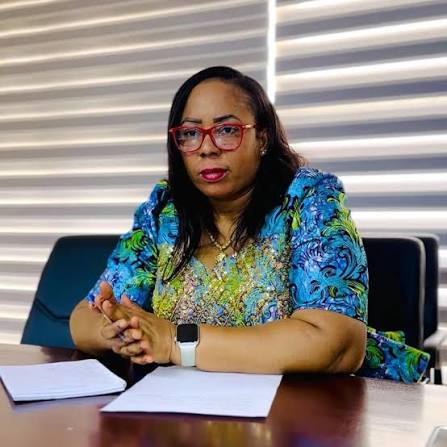
At the centre of Greater Accra’s emergency response has been the Regional Minister and Member of Parliament for Shai-Osudoku, Hon. Linda Obenewaa Akweley Ocloo, who joined officers of the National Disaster Management Organisation (NADMO) on the frontlines to distribute relief items directly to flood victims. Rather than observing events from a distance, she stood beside affected residents, sharing their grief while overseeing the delivery of urgently needed assistance.
The scenes witnessed across the region were heartbreaking. Families who only days earlier enjoyed the security of their homes suddenly found themselves without shelter, possessions or livelihoods. Children were forced into temporary accommodation while many parents faced the painful uncertainty of beginning life again from almost nothing.
For countless survivors, the floods represented more than a natural disaster. They marked the loss of treasured memories, years of hard work and, for some, the unimaginable grief of losing loved ones. Across affected communities, hope became as essential as food, shelter and medical care.
Speaking during relief operations, Hon. Linda Ocloo conveyed a message of solidarity that resonated deeply with victims. “Witnessing the pain, loss and uncertainty on the faces of our people is profoundly heartbreaking. To every family that has lost a loved one, a home, a livelihood or cherished possessions, please know that you are not alone. Government stands with you, and together we shall rebuild stronger communities.”
Her reassurance reflects the broader humanitarian response directed by the administration of John Dramani Mahama, which authorised the immediate release of emergency resources from the national Contingency Fund to accelerate relief operations and support vulnerable households across the affected regions.
According to the latest Situation Report issued by the National Disaster Management Organisation, flash floods and overflowing rivers inundated communities across seven regions following nearly thirteen hours of torrential rainfall between 29 June and 2 July 2026. The scale of the emergency quickly overwhelmed local response capacities, prompting coordinated rescue operations involving multiple state institutions.
NADMO’s Emergency Operations Centre received more than 1,200 distress calls as rescue teams issued shelter in place advisories, conducted evacuations and transported vulnerable residents to safer locations. The latest official assessment indicates that 89,736 people from 17,948 households have been displaced, while seven people remain missing and thirty-four lives have tragically been lost.
These statistics tell only part of the story. Behind every number lies a family coping with grief, uncertainty and the difficult task of rebuilding. The floods have once again highlighted the vulnerability of rapidly expanding urban settlements, inadequate drainage infrastructure and communities situated within flood prone zones.
Emergency experts increasingly warn that climate change is intensifying extreme weather events across West Africa, demanding a shift from reactive disaster management toward long term resilience planning. Investments in drainage systems, improved land use enforcement, early warning technologies and community preparedness are becoming indispensable components of sustainable urban governance.
For Hon. Linda Ocloo, the responsibility extends beyond emergency relief. She has reaffirmed her commitment to working closely with NADMO and all relevant government agencies to restore hope, rebuild damaged communities and strengthen preparedness measures capable of reducing future disaster risks across Greater Accra.
“Our responsibility does not end with emergency assistance,” she declared. “We remain fully committed to restoring hope, rebuilding lives and strengthening our collective preparedness so that Greater Accra becomes safer, stronger and more resilient for future generations.”
The response unfolding across Greater Accra demonstrates that effective disaster management depends upon coordinated leadership, responsive institutions and compassionate engagement with affected communities. While infrastructure can be reconstructed, rebuilding public confidence requires visible leadership that places people at the centre of national recovery efforts.
As Ghana confronts one of its most severe flooding emergencies in recent years, the determination displayed by rescue personnel, volunteers, local authorities and government officials offers a powerful reminder that resilience is ultimately built through unity. The road to recovery will undoubtedly be long, but with sustained commitment, accountable governance and national solidarity, the country can transform this tragedy into an opportunity to build safer communities and a more disaster resilient future.