

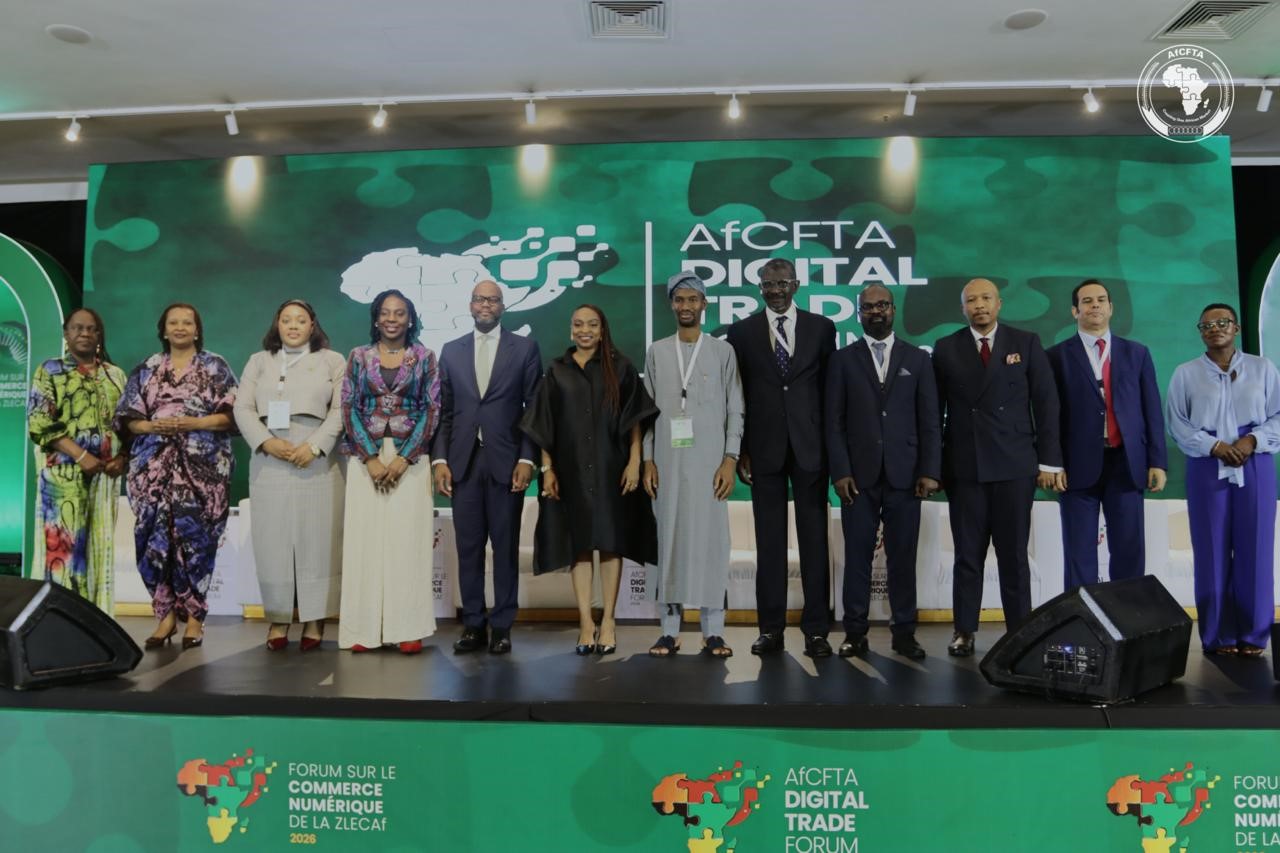
The African Continental Free Trade Area (AfCFTA) Secretariat has declared that Africa’s digital trade agenda has entered a new phase of implementation following the successful conclusion of the Second AfCFTA Digital Trade Forum in Lagos, Nigeria.
Held under the theme “Digital Trade for a Connected African Market,” the forum brought together ministers, policymakers, regulators, entrepreneurs, investors and development partners from across the continent to chart practical steps toward building Africa’s single digital market.
The meeting concluded with the adoption of Eight Calls to Action, a roadmap designed to accelerate implementation of the AfCFTA Protocol on Digital Trade, moving the agreement beyond negotiations to tangible benefits for businesses and citizens.
The roadmap urges African countries to fast-track ratification of the Protocol, strengthen digital public infrastructure, modernise customs and border procedures, promote secure cross-border payments, enhance cybersecurity and consumer protection, expand digital skills and inclusion, mobilise investment for innovation, and deepen public-private partnerships.
Speaking at the closing ceremony, Secretary-General of the AfCFTA Secretariat, H.E. Wamkele Mene described digital trade as a present-day opportunity capable of transforming Africa’s economy and creating opportunities for millions of Africans.
He stressed that harmonised regulations, improved connectivity, trusted data governance and digital skills are essential to unlocking the continent’s full digital potential, particularly for women, youth, rural communities and small businesses.
“We are ready to take responsibility for our own destiny as Africans, to advance Africa’s digital economy, with the support of our partners across the world,” H.E. Mene said.
Nigeria’s Honourable Minister of Industry, Trade and Investment, Dr. Jumoke Oduwole, who also chairs the AfCFTA Council of Ministers Responsible for Trade, reaffirmed Nigeria’s commitment to leading implementation of the Digital Trade Protocol as one of its co-champions.
The forum also showedcased practical initiatives already supporting implementation. Through the AfCFTA Digital Inclusion and Entrepreneurship Programme (ADIEP), developed in partnership with Google, 7,500
small and medium-sized enterprises across 19 African countries are receiving training in cross-border digital trade, cloud technologies and artificial intelligence to strengthen their competitiveness in the continental market.
Participants also welcomed progress made by the Pan-African Payment and Settlement System (PAPSS), which is simplifying cross-border payments and reducing transaction costs for African businesses.
A major highlight of the forum was the signing of a Memorandum of Understanding between the AfCFTA Secretariat and Quest Ghana Limited to develop a Digital Trade Corridor that will facilitate, track and settle cross-border trade transactions in line with AfCFTA rules.
With Africa’s digital economy currently valued at about US$180 billion and projected to reach approximately US$712 billion by 2050, the Secretariat emphasised that the real measure of success will be effective implementation at the national level.
The forum concluded with a call on African governments to integrate digital trade into national development and trade strategies, ensuring that continental commitments translate into real opportunities for businesses, innovation, investment and inclusive economic growth across Africa.