

The African Continental Free Trade Area (AfCFTA) is set to revolutionise not just the movement of goods, but the very fabric of how Africans work, create, and collaborate, according to the AfCFTA’s Director for Trade in Services, Emily Mburu-Ndoria.
In a wide-ranging interview on the AfCFTA podcast, MsEmily Mburu-Ndoria outlined how the AfCFTA Protocol on Trade in Services holds the key to unlocking opportunities for everyone from musicians and fashion designers to lawyers and nurses across the continent.
“There are no trading in goods without trading in services,” Ms. Mburu-Ndoria declared, explaining that services such as transport, logistics, and financial payments are essential to moving goods across borders. From maritime and air transport to tourism, telecommunications, and even hairdressing, the protocol covers 12 broad services sectors, of which five have been prioritised for negotiation: business services, communication services, financial services, tourism services, and transport services.
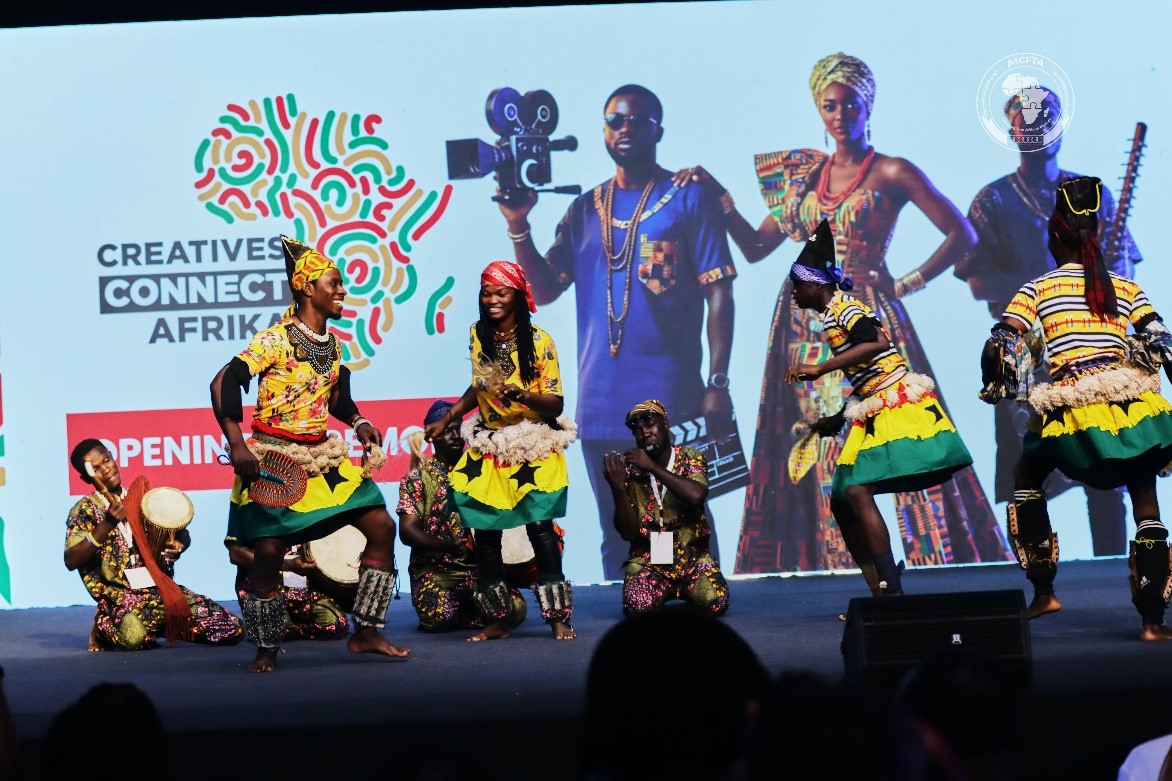
The interview highlighted the recent Creative Connect Africa event in Accra, Ghana, as a powerful demonstration of the protocol’s potential. The gathering brought together young African creatives, including musicians, filmmakers, fashion designers many of whom were unaware that the AfCFTA could directly benefit their work.
“Nobody had thought that the AfCFTA can be that interesting,” Ms. Mburu-Ndoria said. “Everyone hears about moving goods. They didn’t know that you can move music from one country to the other.”
The director in charge of Trade in Services emphasised the interconnectedness of the AfCFTA’s various protocols. For the fashion industry, she noted, the clothes themselves fall under trading goods, while the designs and creative input are services. Intellectual property rights protect the music, and digital trade enables distribution through platforms like YouTube and Spotify.
A central challenge, she explained, is the lack of mutual recognition of professional qualifications across African countries. She posed a pointed question: “Why is it easier for the UK to accept my qualifications as a Kenyan, but it’s hard for Ghana to actually accept it?”
The answer, she suggested, lies in perception and a lingering colonial mindset. “We started thinking of each other as foreigners on the continent,” she said, noting that Ghanaian teachers and even a Ghanaian Chief Justice once served in Kenya with ease.
To address this, the Secretariat is developing guidelines for mutual recognition agreements (MRAs) and sectoral recognition agreements.
Beyond regulations and negotiations, Ms. Mburu-Ndoria stressed the need for a fundamental shift in perception. “Perception is everything” when it comes to trading services, she said.
As the AfCFTA moves from negotiations to implementation, Ms. Mburu-Ndoria sees immense opportunity for African service providers. “Africa has a lot, a lot to offer. It’s the lack of awareness, the lack of coming together, the collaboration that we need as a continent that is lacking,” she said.
Ms. Emily Mburu-Ndoria, the director of Trade in Services painted a picture of a continent on the cusp of transformation as the protocol on Trade in Services opens up new opportunities for African service providers.