

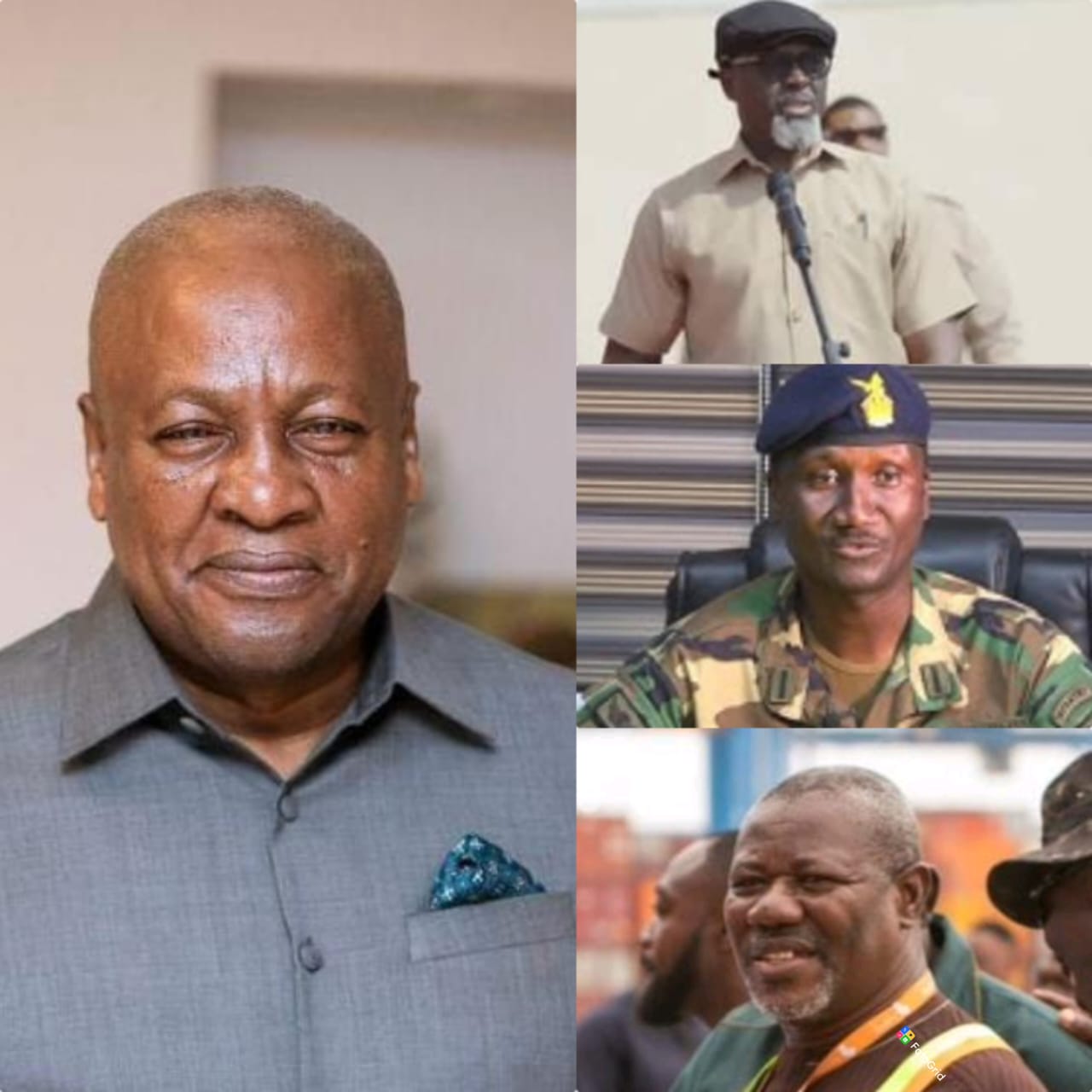
Story By: Felix Ernest Odamtten and Mohammed Faisel Mustapha
Questions are being raised over the chain of command and coordination of security operations at the Tema Port following changes to the position of a security liaison officer and allegations surrounding the handling of security responsibilities at the country’s largest maritime gateway.
The current Tema Port Security Manager is Colonel Daniel Atobrah Bondah, whose role involves security management and coordination at the port.
Sources familiar with security operations at the port told Felix Ernest Odamtten and Mohammed Faisel Mustapha that the position of a security liaison officer was recently changed following allegations of corruption against the officer who previously occupied the role.
A replacement was subsequently appointed to take over the liaison responsibilities.
But rather than bringing clarity to the security arrangement, the changes have, according to one source, raised fresh questions about who exercises operational authority, who supervises security personnel and who ultimately answers for security lapses at the port.
The questions become particularly significant against the backdrop of an alleged cocaine consignment said to have passed through the Tema Port.
The source, who spoke on condition of anonymity because of the sensitivity of the matter, believes that the circumstances surrounding the alleged consignment warrant a closer examination of the port’s security architecture.
Who is responsible for what?
At the heart of the concerns is the relationship between the National Security liaison function and the established Port Security Management structure.
According to the source, governments traditionally appoint security liaison officers to facilitate coordination between the government’s security structures and the various agencies operating at the port.
The source alleged, however, that following the changes to the liaison position, the Port Security Manager, currently Colonel Daniel Atobrah Bondah, was made to perform functions associated with the liaison role.
That arrangement, the source argued, could create an overlap of responsibilities and raise questions about independent supervision.
“If you have a Port Security Manager becoming a liaison officer, it is conflict of interest,” the source told these journalists during an undercover conversation.
The source explained that the Port Security Manager has responsibility for the deployment and coordination of security personnel across different terminals and operational areas of the port.
The question, therefore, is whether the same office should also assume responsibilities associated with a separate liaison function.
And if the roles overlap, who supervises whom?
The cocaine question
The concerns take on added significance because of an alleged cocaine consignment said to have passed through the Tema Port.
The source questioned how an illicit consignment could allegedly move through a facility protected by multiple security agencies, CCTV surveillance and cargo-screening systems without detection.
“There are CCTV cameras all over the port,” the source said.
That assertion raises a number of questions that investigators could potentially answer through the records already generated by the port’s security systems.
Which route did the alleged consignment take?
Which terminal or operational area did it pass through?
Who was deployed to that area?
What did the CCTV footage show?
Were the relevant containers or cargo scanned?
And, perhaps most importantly, who was responsible for security supervision at the time?
The source believes those questions can be answered by examining CCTV recordings, personnel deployment schedules, scanning records, access-control records and other operational documents.
“Who appointed the officers?”
The source also raised questions about the personnel deployed to various parts of the port and the authority under which they operated.
It mentioned a National Security operative identified as Mohammed Mamudu, whom the source claimed had been presented as a director responsible for operations within the National Security structure at the port.
The source said investigators would need to establish the identity and authority of persons who appointed the officers on duty, as well as the reporting structure under which those officers operated.
“If I am the head of operations and something passes through my jurisdiction, they should have called me because I appointed the people there,” the source said.
The statement raises a fundamental issue in any investigation into an alleged security breach: who had operational responsibility at the material time?
That question cannot be answered merely by identifying the agencies present at the port. It requires establishing the actual chain of command, including who deployed personnel, who supervised them and who received reports from them.
A port guarded by multiple agencies
The Tema Port is not secured by a single institution.
Security operations involve several agencies, each with its own mandate.
The source mentioned the Ghana Revenue Authority’s Customs Division, National Security, Port Security Management, the Food and Drugs Authority and other institutions operating within the port environment.
Customs has responsibilities relating to cargo documentation, revenue protection and border-control functions, while National Security deals with intelligence and security matters, including suspected illicit activities.
The presence of several agencies makes coordination particularly important.
Where responsibility is shared, however, accountability can become complicated if the lines of authority are not clearly defined.
That is why the question of who was responsible for what at the time of the alleged cocaine movement deserves closer scrutiny.
The military connection
The Port Security Manager’s position has historically involved senior officers of the Ghana Armed Forces.
In March 2021, the Ghana Ports and Harbours Authority (GPHA) announced the handing over of the Port Security Manager position at Tema from Colonel William Kwabiah to Colonel Emmanuel Nyante, both of the Ghana Armed Forces.
GPHA records have also previously identified a National Security liaison at the Tema Port.
In October 2020, GPHA identified Sub-Lieutenant Christian Kofi Tettey as the National Security Liaison at the Port of Tema during a briefing on measures to prevent the importation of contraband.
More recently, a January 2026 Ghana News Agency report identified Colonel Daniel Atobrah Bondah as the Tema Port Security Manager and reported on joint security operations involving Customs, the Ghana Navy, Marine Police, Immigration and other agencies.
The reference to Colonel Bondah in this report is in relation to his official position as Tema Port Security Manager and does not, by itself, constitute an allegation of wrongdoing against him.
These records demonstrate that the port has historically operated with different security functions and multiple institutions working alongside one another.
The question now is whether those functions remain sufficiently separated and coordinated.
What the records could reveal
If an investigation is opened into the alleged cocaine consignment, investigators would not necessarily have to rely solely on testimony from security officials.
There should be a paper and electronic trail.
CCTV footage could establish the movement of vehicles, personnel and cargo.
Deployment records could identify officers assigned to particular locations.
Scanning records could indicate whether cargo passed through designated screening processes.
Access-control records could establish who entered restricted areas.
Terminal records could potentially show the movement and handling of the relevant cargo.
And the chain-of-command records could establish who was responsible for supervising the officers involved.
Taken together, those records could provide a clearer picture of what happened and whether established procedures were followed.
Beyond individual blame
The source stressed that the purpose of an investigation should not necessarily be to target particular individuals.
Rather, it should establish what happened, who was responsible for what, whether established procedures were followed and whether weaknesses existed in the system.
That distinction is important.
An allegation that an illicit consignment passed through a heavily secured port does not, by itself, establish that any particular officer or institution was involved in wrongdoing.
It does, however, raise legitimate questions about the effectiveness of the security system and the mechanisms for detecting and preventing such incidents.
The broader concern is also significant.
Ghana’s ports serve as major gateways for international trade, and allegations involving cocaine trafficking can attract international scrutiny and potentially affect the country’s reputation as a secure transit point for legitimate commerce.
For that reason, the issues raised by the source require facts, not speculation.
A comprehensive investigation, supported by CCTV footage, deployment records, scanning data, access records and the relevant chain-of-command documents, could help determine what actually happened.
Until such evidence is examined, the allegations remain allegations.
But the questions surrounding who was in charge, who deployed the officers, who supervised them and how the alleged consignment passed through the security net are questions that the authorities may need to answer.