

Story By: Felix Ernest Odamtten / Mohammed Faisal Mustapha
For many teenagers beginning life at the Presbyterian Boys’ Secondary School (PRESEC), Legon, the transition into boarding school represents more than a change of classroom. It is a new chapter marked by separation from family, new responsibilities and the challenge of adapting to an unfamiliar environment.
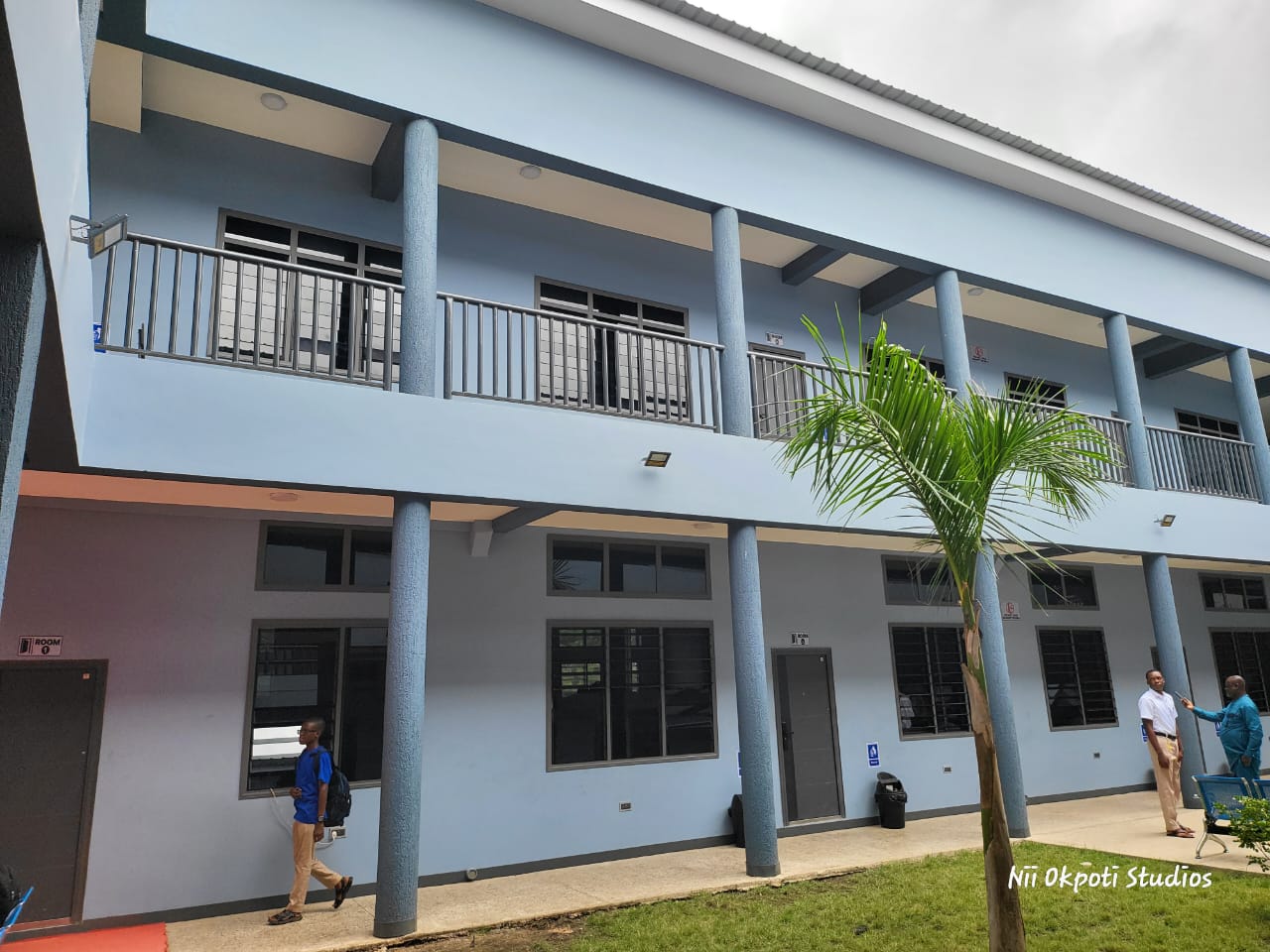
For the first year students of the newly established House 15, however, that transition has been accompanied by a different experience: moving into a modern residential facility designed to provide comfort, order and a conducive environment for learning.
The students have therefore expressed profound appreciation to businessman and philanthropist Dr Ernest Ofori Sarpong for providing the school with the ultra modern facility, describing the new house as a “home away from home.”
Known as the Ofori Sarpong House, House 15 has become the latest addition to PRESEC’s residential infrastructure and is providing its pioneer occupants with facilities that include modern sleeping areas, comfortable beds, functional lighting and fans, as well as clean washrooms and bathrooms.
For the students, the significance of the facility extends beyond its physical appearance. They believe that a comfortable residential environment can contribute to their ability to concentrate, develop discipline and pursue their academic ambitions with greater confidence.
One of the first year students, a resident of Room Two, described himself as “privileged and lucky” to be among the pioneer occupants of the new house, expressing excitement about beginning his PRESEC journey in such surroundings.
“I feel very privileged and lucky to be one of the newest members in House 15. It is ultra modern and all the facilities are clean and very neat. I am very lucky and happy to be here,” he said.
He said his room had 44 comfortable beds, while the washroom facilities included 12 separate stalls fitted with doors, features he said had made life in the house more convenient for the students.
Turning his attention to the benefactor, the student expressed appreciation for the investment, saying, “Thank you for building us this house and for giving us the feel of home when we are away from home.”
Another freshman, Khalid Mohamed, also expressed gratitude to Dr Ofori Sarpong, linking the quality of the facility to the students’ broader academic aspirations and future ambitions.
“I would first give all thanks to God and also thank Ofori Sarpong for giving us this nice facility to keep us so that we can learn better for the future,” he said.
Khalid said the facility compared favourably with other residential facilities within the school and prayed for God’s blessings upon Dr. Ofori Sarpong for his contribution towards the development of PRESEC.
For the Housemaster, Mr Nathaniel Boatway, the significance of House 15 lies not only in its modern architecture but also in the opportunity it presents to establish a new culture of excellence, discipline and responsibility among its pioneer residents.
Mr Boatway said the house was unique because it was newly constructed and its design and structure differed from the other residential houses within the school, giving the pioneer students the responsibility of helping to establish its identity and traditions.
He said the establishment of House 15 was also significant because Dr Ofori Sarpong, in his capacity as Global President of the PRESEC Old Boys Association, had taken the initiative to support the school with such a major residential development.
The current occupants, he explained, were pioneers whose conduct and achievements would eventually become part of the history and identity of the house.
“We want these students to participate fully in the academic, sporting and other activities of the school,” Mr Boche said, emphasising that being pioneers carried both privileges and responsibilities.
Beyond the physical infrastructure, he said, discipline remained central to life at PRESEC, with students expected to follow carefully structured daily routines and respond promptly to scheduled activities.
According to him, bells and sirens are used to signal transitions between classroom sessions, breaks and other activities, while teachers and house authorities work together to monitor students and ensure that established standards are maintained.
“The discipline is very high in the school and it is controlled by almost all teachers, with the headmaster, as the head of the school, ensuring that these things are properly executed,” he said.
Mr Boatway said the school’s approach was intended to help students understand that academic success was inseparable from discipline, responsibility and respect for institutional rules.
He also highlighted a number of interventions associated with Dr Ofori Sarpong’s involvement in the development of PRESEC, including the construction of House 15, support for the school’s National Science and Maths Quiz (NSMQ) team, the alumni centre and the school’s astroturf facility.
He said such interventions had contributed to the school’s infrastructure and created additional opportunities for students to develop their academic, sporting and extracurricular talents.
House 15, he explained, is currently made up predominantly of first year students, with a number of senior students also assisting the Housemaster in maintaining order and supporting the younger students as they adapt to boarding school life.
The introduction of a new residential facility, however, also brings with it the responsibility of protecting the investment, and Mr Boatway said the house authorities had begun educating students on the proper use and maintenance of the infrastructure.
Notices have been placed at strategic locations to remind students about appropriate use of walls, litter bins, washrooms, bathrooms and water taps, among other facilities.
Mr. Boatway expressed confidence that continuous education, supervision and student participation would help preserve the facility and ensure that it remains useful to generations of PRESEC students.
He said House 15 was being developed around the principles of excellence and character formation, with the school authorities considering the appropriate motto, vision, mission and core values that would eventually define the house.
For the pioneer students, the experience is already becoming part of their formative years at one of Ghana’s prominent secondary schools. Their appreciation reflects the wider expectation that infrastructure should not merely provide accommodation but should create an environment in which young people can learn, grow and prepare for the responsibilities of adulthood.
As House 15 begins its journey within the PRESEC community, its story will ultimately be measured not only by the quality of its buildings and facilities, but also by the character, academic achievements and contributions of the students who will pass through its doors. In that sense, the ultra modern facility represents both an investment in infrastructure and a long term investment in the young people who will inherit its legacy.