

African businesses are set to benefit from improved market access, reduced customs duties and expanded manufacturing opportunities following the harmonisation of Rules of Origin under the African Continental Free Trade Area (AfCFTA).
The Rules of Origin, which determine whether products qualify as originating from Africa, are fundamental to accessing preferential tariff treatment under the Agreement.
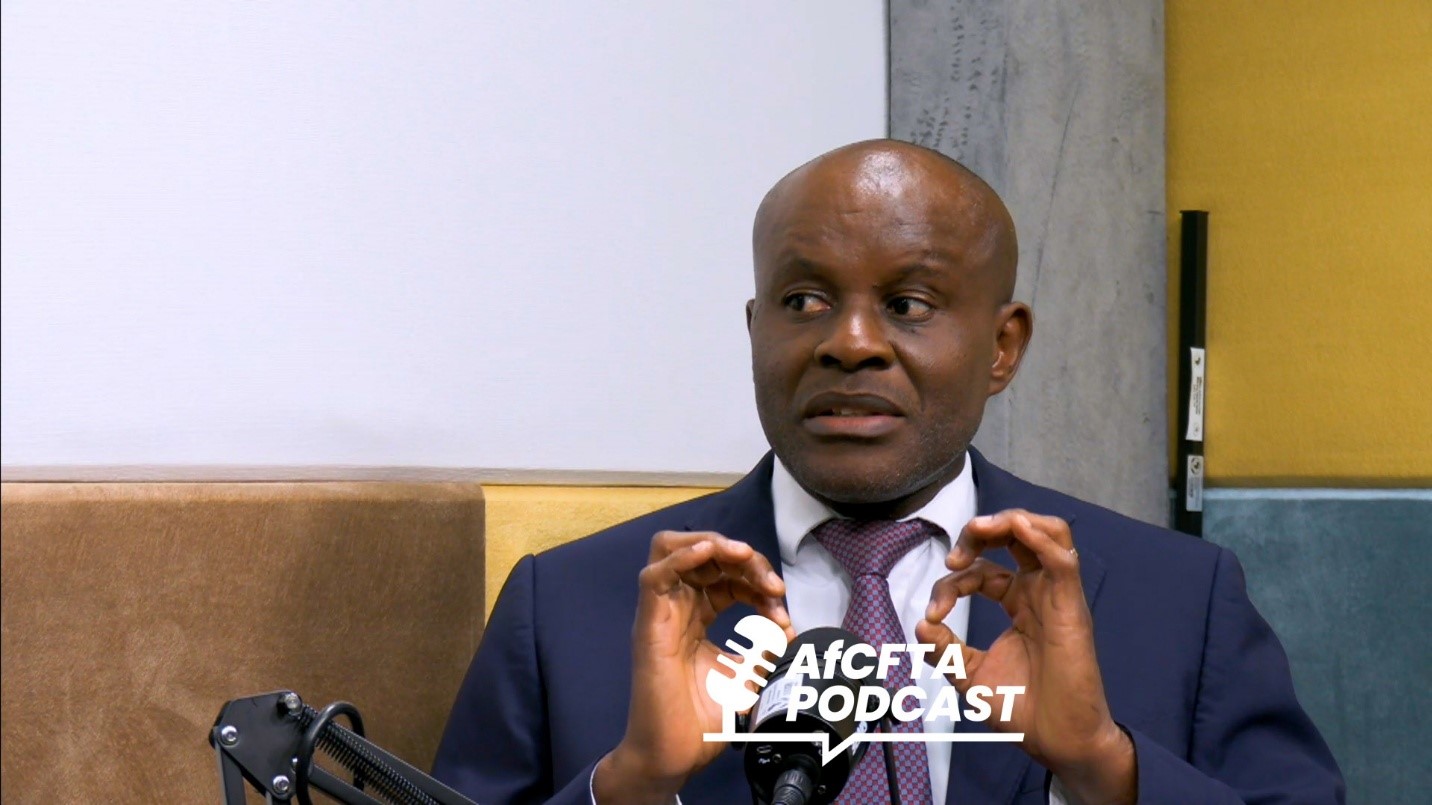
Speaking on the AfCFTA Secretariat’s official podcast, Rules of Origin expert Mr. Didier Bonyeme Bokomba described the harmonised framework as a major milestone in advancing the implementation of the Agreement and creating a more predictable trading environment across the continent.
He explained that qualifying African products could benefit from reduced or zero customs duties, making them more competitive and encouraging increased trade among AfCFTA State Parties.
According to him, negotiations on the harmonised Rules of Origin began in 2018 and were substantially concluded in October 2025, covering more than 5,000 products under the internationally recognised Harmonised System (HS).
The achievement establishes a common framework for determining the origin of goods, enabling businesses to operate under consistent product-specific requirements across participating African markets.
Simplifying Trade for African Businesses
Mr. Bokomba explained that products generally qualify as originating goods through two principal approaches: being wholly obtained or produced using originating materials or undergoing sufficient transformation within Africa.
For products manufactured using imported materials, the framework provides five criteria for determining substantial transformation, including changes in tariff classification, value addition and specified manufacturing processes.
He encouraged businesses, particularly small and medium-sized enterprises (SMEs), to familiarise themselves with the product-specific requirements contained in Appendix 4 of the AfCFTA Rules of Origin framework.
By identifying the correct HS code for their products, exporters can determine the applicable rules and organise their production processes to meet the requirements for preferential treatment.
He further stressed the importance of obtaining a Certificate of Origin from the designated competent authority, describing it as the passport that enables qualifying goods to benefit from preferential tariffs.
Promoting African Manufacturing and Regional Value Chains
Beyond facilitating trade, Mr. Bokomba emphasised that the Rules of Origin are an important instrument for promoting industrialisation and strengthening regional manufacturing networks.
He highlighted the principle of cumulation, which allows qualifying materials and components originating from different AfCFTA State Parties to be considered originating inputs when incorporated into finished products.
Using the automotive industry as an example, he explained that a vehicle manufacturer in Ghana could source qualifying components from Egypt, Morocco, South Africa and Kenya, with these inputs contributing towards the originating content of the finished vehicle.
This approach encourages African countries to participate in interconnected production networks rather than relying exclusively on domestic materials or imports from outside the continent.
He noted that additional provisions, including the absorption principle and tolerance rules, offer manufacturers flexibility in meeting applicable origin requirements.
According to him, these mechanisms can support the development of regional value chains, attract manufacturing investment and create opportunities for African businesses to contribute to the production of finished goods.
Addressing Implementation Challenges
Despite the progress achieved, Mr. Bokomba acknowledged that limited awareness and technical understanding of the Rules of Origin remain challenges, particularly among SMEs.
He called for increased capacity building to help businesses, customs authorities and other stakeholders understand and effectively implement the framework.
He commended the World Customs Organization for supporting training programmes involving customs officials, private-sector operators and other stakeholders, while highlighting resource limitations and institutional coordination as continuing challenges.
Mr. Bokomba also cautioned that minor processing or simple assembly does not automatically confer African origin, as products must satisfy the prescribed manufacturing requirements.
Looking ahead, he expressed optimism that effective implementation of the harmonised Rules of Origin would facilitate cross-border trade, strengthen Africa’s industrial base and increase intra-African trade.
He emphasised that the ultimate objective is to encourage African businesses to produce, source materials and create greater value within the continent.
As the AfCFTA advances from negotiations to implementation, the harmonised Rules of Origin provide a critical foundation for transforming Africa into an integrated market where African businesses can manufacture, trade and compete more effectively.