

Story By: Felix Ernest Odamtten / Muhammad Faisal Mustapha…..
Ghana’s campaign to protect its threatened water bodies has intensified along the Bia River, where the National Anti Illegal Mining Operations Secretariat (NAIMOS) has disrupted illegal mining activities at Krokosue in the Juaboso District and Patakro in the Bodi District of the Western North Region.
The operation, conducted on August 7, 2026, combined riverine patrols with ground and mobile operations aimed at identifying and disrupting mining activities operating along the Bia River and its tributaries. The intervention reflects growing concern over the pressure illegal mining continues to place on Ghana’s river systems and surrounding ecosystems.
During the patrols, the NAIMOS Taskforce identified more than 20 active mining pits along sections of the river. Chanfang machines and water pumps were being extensively used to wash mined materials, bringing mining activity directly into the river environment and increasing the potential for further disruption of the waterway.
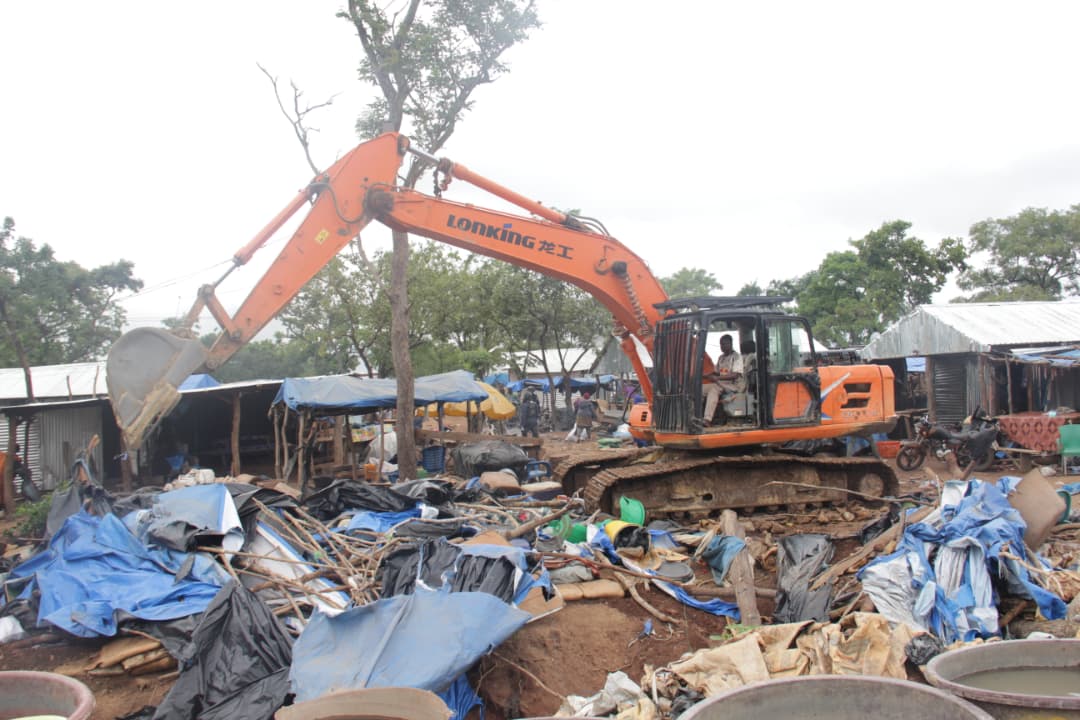
The operation resulted in the immobilisation of three excavators, with critical components seized by the Taskforce. Four motorbikes, a water pump and a pump action firearm were also seized during the intervention, while personnel moved to dismantle infrastructure supporting the illegal mining operations.
Fourteen chanfang machines were destroyed, alongside two large water pumps, three motorbikes and four makeshift structures associated with the mining activities. The intervention was intended to disrupt the machinery and physical infrastructure enabling illegal mining to continue along the river corridor.
“Along the Bia, the battle against illegal mining is increasingly becoming a battle for the survival of the river itself.”
The environmental consequences uncovered during the patrols were particularly striking. Sections of the Bia River had reportedly turned brown and milky, a visible indication of the severe disturbance affecting the waterway. Mining activities had also altered parts of the river channel, with illegal miners diverting sections of the river to facilitate their operations.
The degradation presents a serious challenge for communities and ecosystems that depend on the Bia and its tributaries. Rivers are not simply channels through which water flows; they form interconnected ecological systems that support agriculture, biodiversity, household needs and local economic activity.
The diversion of sections of the river channel adds another layer of concern. By altering the natural course of the waterway to accommodate mining operations, illegal miners can intensify erosion and disturb riverbanks, while potentially creating further environmental problems beyond the immediate mining sites.
“When a river is forced to change its course for mining, the damage extends far beyond the pit.”
For NAIMOS, the latest operation is therefore part of a broader effort to prevent illegal mining from becoming permanently embedded along Ghana’s river corridors. The Secretariat says it will sustain riverine and ground operations in the area to disrupt illegal activities and prevent miners from returning to cleared locations.
The continued presence of heavy machinery and water intensive processing methods along the Bia demonstrates the scale of the challenge confronting enforcement agencies. Clearing individual sites may provide an immediate reprieve, but sustained surveillance will be necessary to ensure that mining operations do not simply relocate to nearby stretches of the river.
NAIMOS is also expected to liaise with relevant government agencies to facilitate the removal of mining equipment from the river corridor and strengthen measures aimed at preventing further degradation. Such inter agency cooperation will be critical to converting enforcement operations into lasting environmental protection.
For communities in Juaboso, Bodi and surrounding areas, the condition of the Bia carries implications that extend well beyond environmental concerns. The health of the river is closely connected to livelihoods, agriculture and the availability of dependable water resources, making its protection an issue of community resilience and long term development.
“The objective is not simply to clear machines from the river; it is to give the Bia a chance to recover.”
The Bia operation also reinforces the difficult balance Ghana faces between the economic attraction of gold and the enormous environmental costs associated with illegal mining. As enforcement expands, the challenge will be to ensure that cleared areas are protected, degraded sections are restored and communities are supported in safeguarding their natural resources.
NAIMOS remains committed to protecting Ghana’s water bodies and restoring areas damaged by illegal mining. Along the Bia River, the latest intervention has disrupted active mining sites, removed key equipment and exposed the extent of environmental damage but the larger test now lies ahead: whether sustained enforcement and restoration can prevent the river from becoming another casualty of the country’s illegal mining crisis.