

Story By: Felix Ernest Odamtten / Muhammad Faisal Mustapha….
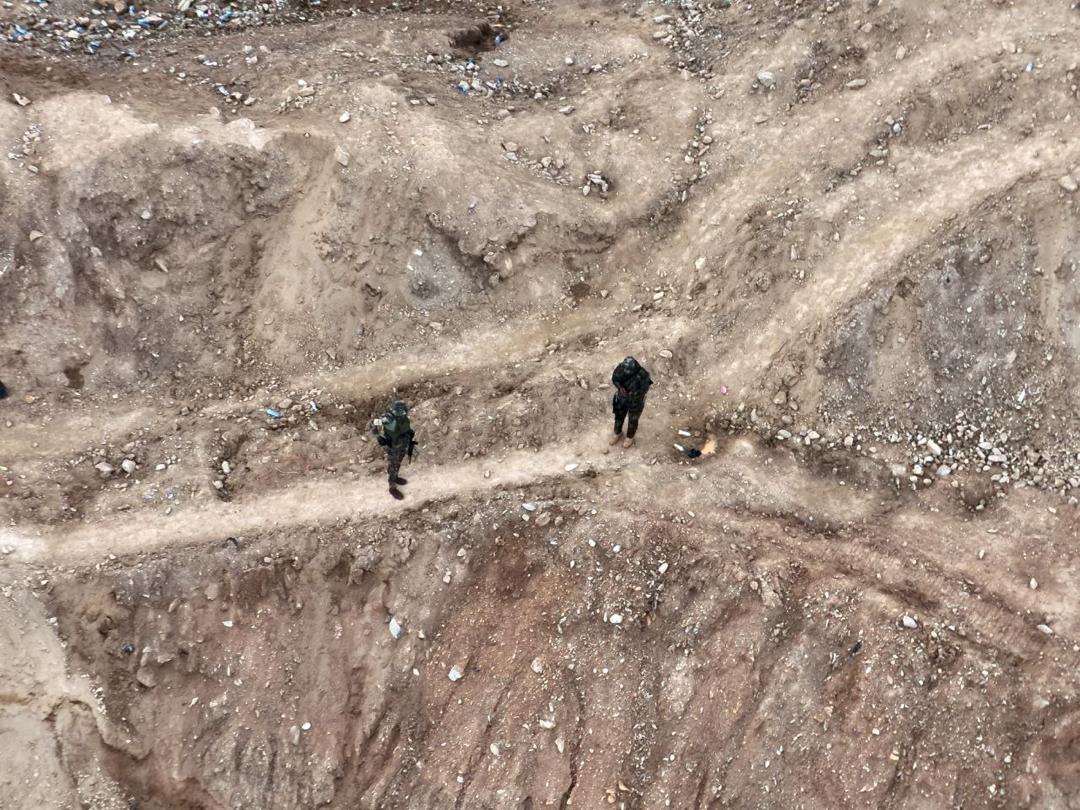
A social media post depicting thousands of people reportedly engaged in illegal mining at Wakawaka in Ghana’s Savannah Region has triggered a major three day intelligence led operation, bringing together the National Anti Illegal Mining Operations Secretariat (NAIMOS), the Ghana Armed Forces and the Ghana Police Service.
Conducted from July 29 to 31, 2026, the operation targeted illegal mining activities in Wakawaka, within the Bole District, following intelligence generated from the widely circulated social media material. The rapid response highlights the increasingly important role of intelligence and digital information in identifying mining sites that may otherwise remain difficult for enforcement agencies to reach.
The joint operation involved NAIMOS working alongside personnel from the Northern Command of the Ghana Armed Forces and the Bole Divisional Headquarters of the Ghana Police Service. Their coordinated deployment was designed to disrupt illegal mining activities, remove equipment from affected locations and prevent the continued expansion of unregulated mining operations.
At the centre of the operation was the discovery of extensive mining activity allegedly involving large numbers of illegal miners. The scale suggested by the social media footage prompted authorities to move beyond routine monitoring and undertake a coordinated intervention involving security and anti illegal mining personnel.
The operation resulted in the seizure of an excavator, seven motorcycles and a tricycle, alongside two excavator power control units and other equipment associated with mining activities. A locally manufactured firearm was also seized during the operation, adding a security dimension to what was initially identified as an environmental enforcement challenge.
“What begins as an environmental violation can quickly become a wider challenge involving public safety, land degradation and community security.”
The joint Taskforce also destroyed 35 chanfang machines and more than 100 makeshift structures reportedly linked to illegal mining activities at the site. The destruction of the structures was intended to disrupt the physical infrastructure supporting the mining operations and make an immediate return to the cleared locations more difficult.
For the authorities, the operation represents more than the removal of machinery. Illegal mining has become one of Ghana’s most persistent environmental challenges, with unregulated activities capable of altering landscapes, degrading agricultural land and placing pressure on natural resources and local communities.
The Wakawaka operation also demonstrates the growing emphasis on intelligence-led enforcement. Rather than relying exclusively on conventional patrols, authorities were able to use information emerging from the public domain to identify a location requiring urgent attention.
“The Wakawaka operation sends a powerful message: remote mining locations are no longer beyond the reach of coordinated enforcement.”
The seized equipment has been secured pending investigations and the completion of the relevant legal and administrative procedures. Authorities will now be expected to establish ownership, determine the circumstances surrounding the mining activities and pursue any further action required under Ghanaian law.
The presence of a locally manufactured firearm among the seized items is particularly significant because it underscores the importance of conducting illegal mining operations within a broader security framework. Effective enforcement requires not only environmental protection but also measures capable of safeguarding personnel and communities operating in areas where unregulated activities have taken root.
For the Savannah Region, where land and natural resources remain central to rural livelihoods, the continued expansion of illegal mining presents a difficult development dilemma. Economic activity generated by mining must be weighed against the potential long term costs of degraded land, disrupted ecosystems and weakened community resilience.
The operation further reinforces the importance of cooperation between national security institutions, environmental authorities, traditional leaders and local communities. Sustained results will depend not simply on dismantling mining sites, but on preventing their re establishment and addressing the conditions that allow illegal mining networks to return.
As the seized equipment remains under investigation, Wakawaka now stands as another test of Ghana’s increasingly determined campaign against illegal mining. The three day operation has disrupted an alleged mining network, destroyed scores of machines and makeshift structures, and demonstrated the capacity of multiple state institutions to respond rapidly when credible intelligence emerges.
“The real measure of success will not be the machines destroyed today, but whether the land remains protected tomorrow.”
The Wakawaka intervention ultimately reflects a broader national struggle over Ghana’s natural resources one in which enforcement, intelligence, environmental protection and community cooperation must work together. For NAIMOS and its security partners, the challenge now is to consolidate the gains made at Wakawaka and ensure that the cleared areas do not become the starting point for another cycle of illegal mining.