

….and Industrial Transformation
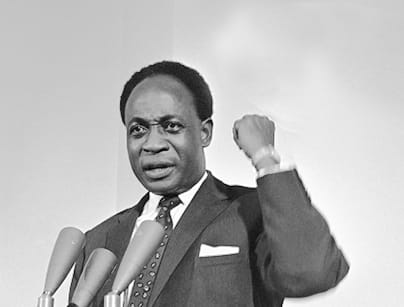
The Progressive Alliance for Ghana (PAG) has used the 117th birth anniversary of Ghana’s first Prime Minister and President, Osagyefo Dr. Kwame Nkrumah, to renew its call for a fundamental transformation of Ghana’s economy, with particular emphasis on youth enterprise, cooperative ownership, value addition and energy security.
The call was made by the party’s Flagbearer, Apostle Dr. John Enyonam Kpikpi, who said commemorating Nkrumah should not be reduced to ceremonies, speeches and the repetition of historical memories.
According to him, the occasion should instead compel Ghanaians to confront the unfinished questions of economic development and national self-reliance.
For PAG, the central question arising from Nkrumah’s legacy is not simply what Ghana achieved in the past, but what kind of country the present generation is preparing for those who will inherit it.
“Remembering Nkrumah must go beyond ceremonies and speeches,” Dr. Kpikpi said in the statement. “It must challenge us to ask a fundamental question: What kind of Ghana are we preparing for the next generation?”
*Nkrumah’s Economic Vision*
The PAG Flagbearer said Nkrumah’s political philosophy was founded on the understanding that political independence could not, by itself, guarantee prosperity for ordinary citizens.
In PAG’s interpretation of Nkrumah’s legacy, independence had to be accompanied by the development of Ghana’s productive capacity, education of its citizens, industrialisation of the economy and strategic use of the country’s natural resources.
It is this aspect of Nkrumah’s legacy that the party says remains particularly relevant to Ghana’s contemporary development challenges.
Dr. Kpikpi argued that the country must continue to examine how its resources, human capital and institutions can be organised to create greater domestic economic value.
For PAG, the issue is therefore not merely whether Ghana possesses gold, bauxite, manganese, lithium, oil, gas and agricultural resources. The more important question, the party argues, is whether Ghanaians are positioned to derive sufficient economic value from those resources.
The statement therefore places economic ownership at the centre of its interpretation of Nkrumah’s unfinished agenda.
*Youth and the Future of Work*
A major part of PAG’s message is focused on Ghana’s young people.
The party argues that Ghana’s greatest resource should not be understood only in terms of minerals and other commodities beneath the ground. It says the creativity, talent, energy and ingenuity of the country’s youth must also be treated as a national asset.
Dr. Kpikpi called for a shift in the way young people are prepared for the world of work.
Rather than an education system that largely prepares graduates to compete for limited formal employment opportunities, PAG says education and skills development should prepare young Ghanaians to become producers, entrepreneurs and owners of productive enterprises.
Technical and vocational education, digital skills, entrepreneurship, apprenticeships, agriculture and manufacturing are among the areas the party believes should receive greater attention.
It also identified mining services and the emerging green-energy economy as areas where young Ghanaians could develop skills and businesses capable of contributing to national production.
The vision articulated by PAG is one in which the young graduate does not approach adulthood solely with the question of where employment can be found, but also with questions about what can be produced, which problems can be solved and what businesses can be created.
This, the party argues, would require a broader understanding of education—one that connects classroom learning with production, innovation and enterprise.
*Cooperatives and the Question of Ownership*
Another major component of the statement is the role of cooperatives in expanding economic participation.
PAG believes cooperative structures can give farmers, artisans, small-scale miners and young entrepreneurs greater collective bargaining power and improved access to finance, technology, markets and processing facilities.
The party’s argument is that individuals operating in fragmented markets often face limitations that can be reduced when producers organise collectively around accountable institutions.
In agriculture, for example, cooperative arrangements could allow farmers to aggregate their produce, obtain machinery and inputs, improve storage and processing and negotiate collectively with buyers.
The party also points to the mining sector, where it says responsible cooperative structures could potentially support greater local participation while contributing to improved safety and environmental standards.
For PAG, cooperative ownership represents more than an organisational arrangement. It is presented as a possible mechanism for widening participation in the productive economy.
The broader principle is that Ghanaian citizens should have opportunities to move beyond being suppliers of raw materials and become participants in the ownership and processing of the economic activities generated from those resources.
*The Raw Materials Question*
At the heart of PAG’s message is a longstanding development question: what happens to Ghana’s resources after they are extracted?
The party argues that the country needs to place greater emphasis on processing, refining, manufacturing and the development of local supply chains.
Gold, bauxite, manganese, lithium, oil and gas are specifically mentioned as resources that PAG believes should contribute to industrial transformation.
The party’s argument extends beyond minerals to agriculture.
According to the statement, Ghana should not focus exclusively on producing and exporting agricultural commodities without simultaneously building the processing industries capable of turning those commodities into finished or higher-value products.
The vision is one in which extraction becomes only the beginning of the economic process rather than the end of it.
“If we mine lithium, we must think beyond exporting ore,” the statement says. “If we produce gold, we must strengthen our refining and downstream industries. If we produce agricultural commodities, we must develop the processing industries that turn them into finished products.”
The underlying proposition is that the measure of Ghana’s resource wealth should not simply be the volume of resources extracted, but the amount of economic value created domestically.
*Energy at the Centre of Industrialisation*
PAG also placed energy security at the centre of its proposed economic transformation agenda.
Dr. Kpikpi argued that industrial development cannot be sustained without reliable, affordable and sustainable energy.
The party therefore called for an energy strategy capable of supporting households, farmers, manufacturers, miners, technology companies and small businesses.
Energy, in PAG’s vision, should serve the productive economy.
A workshop should be able to operate reliably. A farmer should be able to process agricultural produce. A factory should be able to maintain production. A digital entrepreneur should be able to run a technology-based business and compete beyond Ghana’s borders.
At the same time, PAG said Ghana must prepare for changing energy demands by expanding investment in renewable energy, energy efficiency and other technologies that can contribute to greater energy security.
The party’s position is that energy policy should therefore be considered not only as a utility issue, but also as an essential component of industrial and economic policy.
*Revisiting the Meaning of Nkrumah’s Legacy*
For PAG, the anniversary of Nkrumah’s birth provides an opportunity to revisit what political independence should mean in economic terms.
The party’s statement frames Nkrumah’s legacy around a series of questions about Ghana’s future.
Can Ghana produce more of what it consumes?
Can young people become owners of productive enterprises?
Can farmers and miners capture greater value from their labour?
Can natural resources contribute more directly to industrial development?
Can the energy sector provide the foundation for a competitive economy?
And can national institutions be designed to serve generations rather than short-term political cycles?
These questions, according to PAG, should form part of the country’s continuing national conversation.
The party says answering them requires more than political rhetoric. It argues that Ghana needs deliberate policies around human-capital development, industrialisation, economic ownership, resource management and energy security.
*From Commemoration to Action*
The significance of PAG’s statement lies in its attempt to connect the historical memory of Nkrumah with contemporary economic questions.
Rather than presenting Nkrumah solely as a historical figure whose achievements belong to the past, the party portrays his ideas about economic self-reliance, industrialisation and African unity as part of an unfinished national project.
Dr. Kpikpi said the tribute Ghana owes Nkrumah should therefore extend beyond monuments, anniversaries and commemorative ceremonies.
For PAG, the more meaningful tribute would be the creation of economic systems that enable citizens to participate more directly in production, ownership and value creation.
The party says that means preparing young people for a changing labour market, supporting productive enterprises, strengthening cooperative structures, adding value to natural resources, investing in reliable energy and developing human capital capable of driving industrial transformation.
It is a vision that places production at the centre of national development.
*The Unfinished Project*
Nkrumah’s birth anniversary has historically provided Ghana and the wider African community with an opportunity to reflect on the political and economic struggles that shaped the continent’s post-colonial history.
PAG’s intervention adds another dimension to that reflection: the question of economic sovereignty.
For the party, political independence must be accompanied by the capacity to produce, innovate, process, own and compete.
It argues that Ghana’s natural resources should become instruments of broad-based economic development, rather than merely commodities moving through an international supply chain.
It also argues that Ghana’s youth should be treated not simply as future employees, but as potential producers, innovators, entrepreneurs and owners.
The party’s message ultimately returns to the central theme of its commemoration: Nkrumah’s dream should not remain confined to history.
It should, in PAG’s words, become a continuing national project.
As Ghanaians mark the 117th anniversary of the birth of Osagyefo Dr. Kwame Nkrumah, the Progressive Alliance for Ghana says the most important tribute may therefore be found not only in remembering what Nkrumah envisioned, but in continuing the national debate over how Ghana can build a productive, self-reliant and prosperous economy.
Dr. Kpikpi concluded the statement by reaffirming PAG’s commitment to what the party describes as the unfinished work of economic self-reliance, human-capital development, cooperative ownership, responsible resource management, industrialisation and energy security.
The message ended with a call that connects Ghana’s national aspirations with Nkrumah’s broader Pan-African vision.