

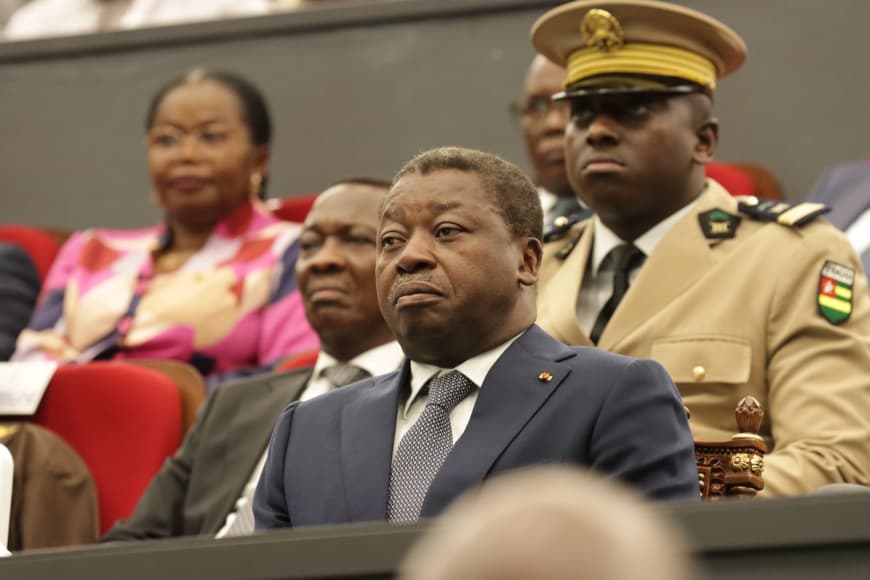
Lomé, Togo — Africa’s economic integration will only succeed if it delivers real opportunities for young people, women, and small businesses, Togolese leader Faure Essozimna Gnassingbé said Monday at the opening of Biashara Afrika 2026 in Lomé.
In a speech focused heavily on inclusion and job creation, Gnassingbé urged African governments and business leaders to ensure that the African Continental Free Trade Area (AfCFTA) becomes more than a policy framework for large corporations and institutions.
“The AfCFTA must also be viewed as a project of economic mobility for this new African generation,” he told delegates gathered for the regional trade forum.
The Togolese leader emphasized that Africa’s rapidly growing youth population represents both a major opportunity and a significant responsibility for governments across the continent.
“Every year, millions of young Africans enter the labor market,” he said, warning that employment has become a central issue for Africa’s economic, social, and political stability.
Gnassingbé called for stronger support for young entrepreneurs, women-led enterprises, and African small and medium-sized businesses (SMEs), arguing that these groups must gain better access to regional markets and continental value chains under the AfCFTA framework.
The speech highlighted concerns that economic integration could fail to gain public support if ordinary Africans do not see direct benefits.
“African integration cannot succeed if it is perceived as a project reserved for large corporations or institutions,” he said. “It must become a reality genuinely experienced by African citizens themselves.”
The Togolese president also advocated for the emergence of stronger African-owned companies capable of competing regionally and internationally. He argued that industrial parks and economic zones across the continent should prioritize African businesses and African capital to ensure wealth generated through industrialization remains within the continent.
His remarks come as African leaders increasingly focus on transforming the AfCFTA from a legal framework into a driver of industrialization, job creation, and intra-African trade.
The Biashara Afrika forum, hosted in Lomé, has brought together ministers, investors, business executives, development institutions, and trade experts to discuss strategies for accelerating economic integration across Africa.
This year’s conference is being held under the theme: “Driving Africa’s Economic Transformation through the AfCFTA.”