

The African Continental Free Trade Area (AfCFTA) Secretariat has declared that Africa’s landmark free trade agreement has entered its most critical phase, with the focus now firmly shifted from negotiating rules to delivering real economic opportunities for businesses and citizens across the continent.
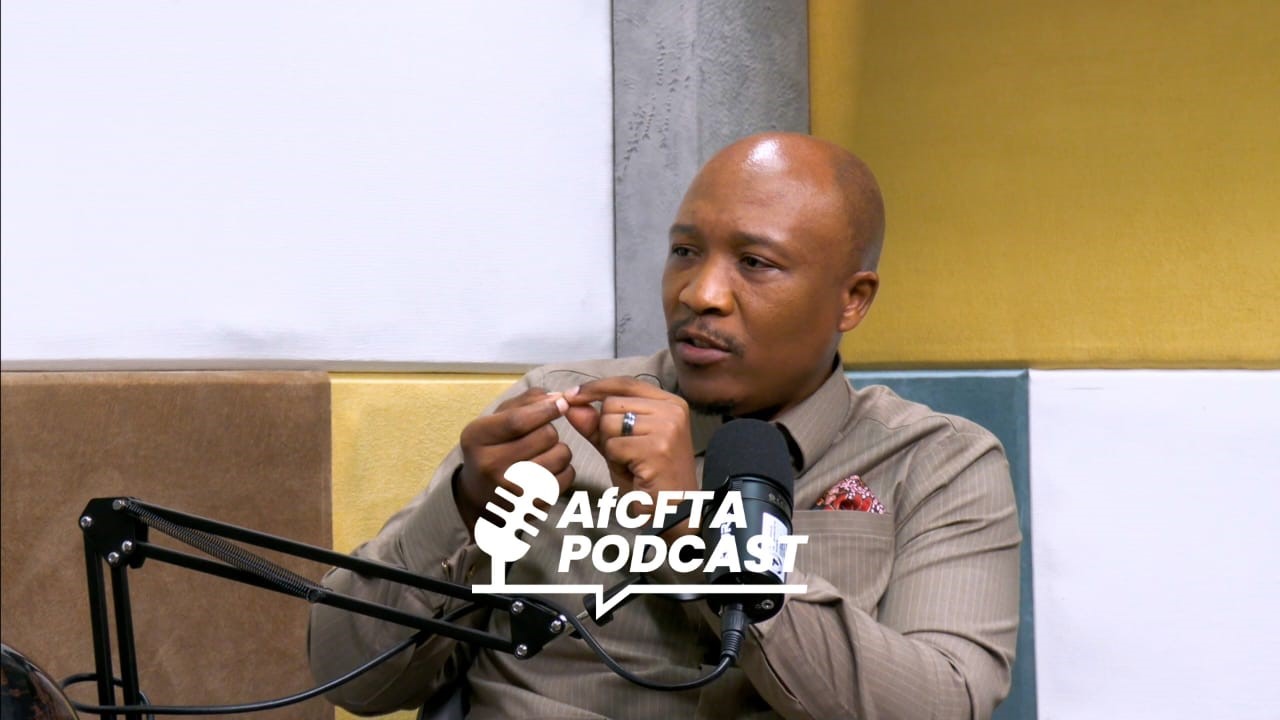
Speaking on the AfCFTA Podcast, the Director of Coordination and Programmes at the AfCFTA Secretariat, Dr. Tsotetsi Makong, said the years of painstaking negotiations have laid a strong foundation and that Africa is now ready to implement what has been agreed.
Using a compelling analogy, Dr. Makong remarked that “we have been in the kitchen for the past four or five years… now it’s time to get out of the kitchen and serve the meal,” emphasizing that the painstaking work of negotiating the Agreement has been completed and that implementation must now take centre stage.
He noted that the continent has produced groundbreaking legal instruments, including the Protocol on Women and Youth in Trade and the Protocol on Digital Trade, which reflect Africa’s own development priorities and are unlike any trade agreements elsewhere in the world.
According to Dr. Makong, implementation is no longer the responsibility of the Secretariat alone. “Everybody has a role to play,” he stressed, explaining that governments, regional economic communities, development finance institutions, the private sector, civil society organizations and development partners must all contribute to making Africa’s single market a reality.
To support this transition, the Secretariat has adopted a comprehensive five-year implementation strategy aimed at strengthening the technical, administrative, institutional, regulatory and infrastructural capacities of African countries. More than 30 State Parties have already developed national implementation strategies, while National Implementation Committees are expected to drive implementation at country level.
Dr. Makong explained that the Secretariat’s priority is to simplify trade for Africa’s micro, small and medium-sized enterprises, particularly women and youth entrepreneurs who form the backbone of the continent’s economy. Rather than burdening traders with technical legal language, the Secretariat intends to work with governments and partners to make cross-border trade easier through better awareness, improved regulations, stronger value chains and easier access to finance.
He stressed that success would not be measured by the number of agreements signed but by the tangible improvements experienced by African businesses and traders. “It’s not just about rules. It’s about impact,” he said, pointing to efforts to expand financing opportunities, simplify border procedures and build implementation capacity across member states.
The Director also underscored the importance of partnerships, revealing that the Secretariat is promoting a “4Cs” approach, co-conceptualizing, co-designing, co-creating and co-delivering programmes with governments and development partners to ensure African priorities remain at the centre of implementation.
Despite acknowledging that the Secretariat operates with limited human resources compared to the enormous scope of its continental mandate, Dr. Makong expressed confidence that the political commitment demonstrated by African leaders would sustain momentum.
He described the AfCFTA as more than a trade agreement, arguing that it represents Africa’s strongest economic response to growing global uncertainty. “The only insurance policy that Africa has, economically speaking, is the AfCFTA,” he declared, expressing optimism that successful implementation will expand intra-African trade, create jobs, strengthen regional value chains and improve the livelihoods of millions across the continent.
As Africa moves decisively from negotiation to implementation, the message from the AfCFTA Secretariat is clear: the framework has been built, the opportunity is before the continent, and the time has come for every stakeholder to help transform the vision of one African market into a lived economic reality.