

Story By: Nii Okpoti Odamtten & Muhammad Faisal Mustapha..
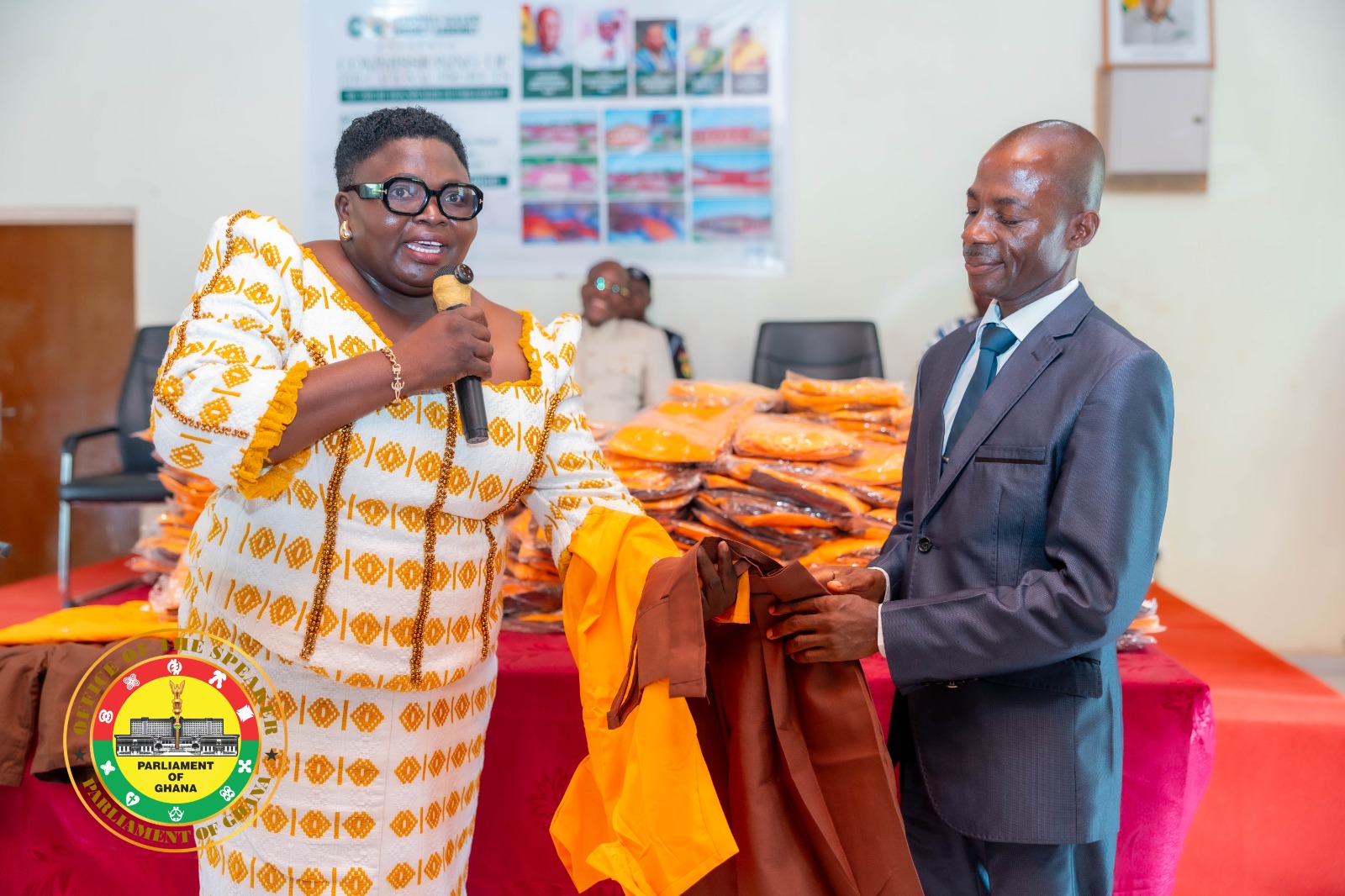
The DA Conference Hall in Nadowli-Kaleo came alive with celebration, optimism and a profound sense of purpose as political leaders, education officials, traditional authorities, parents and schoolchildren gathered for an event that transcended the simple distribution of school uniforms. It became a powerful affirmation of the district’s unwavering commitment to education and the future of its young people.
Held on June 8, 2026, the ceremony united stakeholders from across the district around a common mission: ensuring that every child, irrespective of economic background, is given the opportunity to learn, thrive and contribute meaningfully to society. What unfolded was not merely a donation exercise but a symbol of collective responsibility and social transformation.
As pupils dressed in anticipation filled the hall, community leaders reflected on the profound significance of investing in education. Their message was clear and consistent: sustainable national development begins with empowering children through access to quality learning opportunities.
Welcoming guests, the District Chief Executive described the distribution of uniforms as a tangible expression of hope, inclusion and social equity. She emphasized that every child deserves the dignity and confidence that come with belonging fully within the educational system.
“Education is not an expense; it is the most valuable investment a nation can make in its future,” She declared. “Every uniform distributed today represents a child whose dreams deserve protection and whose potential deserves opportunity.”
The event also served as a tribute to the enduring educational legacy of the Rt. Hon. Speaker of Parliament, a distinguished son of Nadowli-Kaleo whose commitment to educational advancement has shaped lives across the district for nearly three decades.
Community leaders recounted numerous interventions that have strengthened schools, supported students and expanded access to educational opportunities. From scholarships and infrastructure development to welfare initiatives and learning support programmes, his contributions have left a lasting imprint on the district’s educational landscape.
For many residents, the latest initiative was viewed as another chapter in a remarkable legacy of service that continues to inspire hope and progress among families seeking a brighter future for their children.
Several speakers highlighted the stories of former beneficiaries who have risen from humble beginnings to become teachers, healthcare professionals, entrepreneurs, civil servants and community leaders. Their achievements stand as living evidence of the transformative power of educational investment.
“True leadership is measured not by titles held but by futures created,” remarked one education stakeholder. “The success stories emerging from Nadowli-Kaleo are proof that when leaders invest in children, communities flourish.”
The donation also addressed a pressing challenge confronting many families. In communities where household budgets remain under pressure, the cost of school uniforms can present a significant obstacle to consistent school attendance and participation.
Parents attending the event spoke openly about the financial burdens they face in balancing educational expenses with daily family needs. For some households, acquiring uniforms has often meant making difficult sacrifices.
Education experts present at the ceremony stressed that school uniforms serve purposes far beyond appearance. They foster a sense of identity, equality and belonging while reducing visible socio economic differences among pupils.
According to education advocates, children who feel included and confident within the school environment are more likely to participate actively in lessons, engage with peers and maintain regular attendance.
For the hundreds of pupils who received uniforms, the occasion was deeply personal. Their smiles reflected more than gratitude; they reflected recognition, encouragement and renewed confidence in their educational journey.
Yet amid the celebration, district leaders offered a candid assessment of challenges facing education within Nadowli-Kaleo. Particular attention was given to the district’s performance in the Basic Education Certificate Examination (BECE), which officials acknowledged has not met expectations in recent years.
Rather than seeking fault, speakers called for collective action and shared accountability. They emphasized that reversing educational setbacks requires cooperation among government institutions, teachers, parents, traditional leaders, religious bodies and development partners.
The District Chief Executive stressed that meaningful educational reform cannot be achieved through isolated interventions alone. Sustainable progress, She noted, depends on stronger supervision, improved teaching outcomes, enhanced discipline and greater parental engagement.
“Improving educational performance is a responsibility that belongs to all of us,” she said. “No child succeeds alone, and no district advances without a united commitment to learning.”
Attention was also directed toward the contributions of the district’s Member of Parliament, whose educational and community development initiatives continue to create opportunities for young people throughout the constituency.
Stakeholders similarly acknowledged the efforts of regional and national leaders whose support for development programmes has strengthened educational access and improved social conditions across communities.
Participants noted that national education policies aimed at expanding access to learning have opened doors for thousands of children, particularly in underserved areas where opportunities were once limited.
Throughout the proceedings, one central message resonated powerfully across the hall: education remains the most effective pathway to breaking cycles of poverty, unlocking potential and driving sustainable development.
Teachers were encouraged to continue serving not only as instructors but also as mentors, role models and custodians of the values that shape future generations. Their influence, speakers observed, extends far beyond the classroom.
Parents and guardians were urged to take an active role in supporting their children’s academic growth by monitoring progress, encouraging discipline and fostering positive learning environments at home.
As the ceremony drew to a close, the newly distributed uniforms took on a meaning far greater than fabric and thread. They became symbols of opportunity, dignity and collective faith in the next generation. In Nadowli-Kaleo, the message was unmistakable: when communities unite behind education, they do more than support children they shape the destiny of generations and build the foundation for a stronger nation.