

By Kwadwo Afari
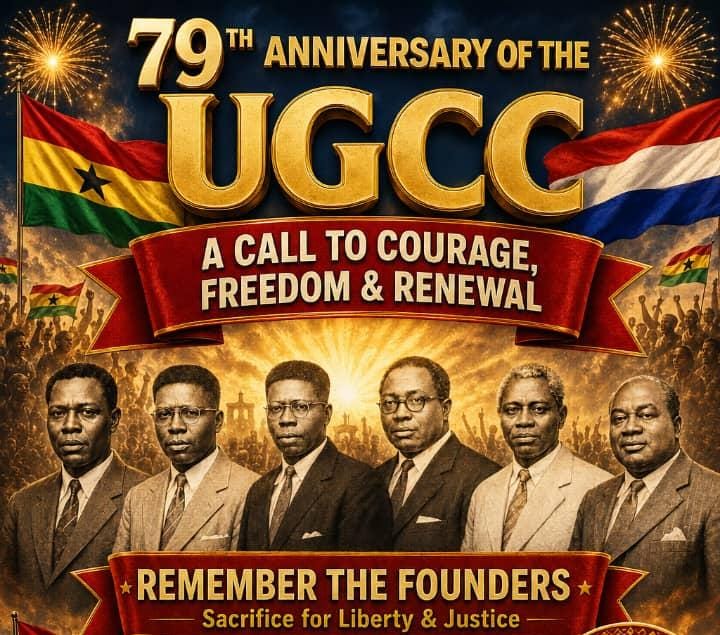
Seventy-nine years ago, the United Gold Coast Convention (UGCC) was founded on a bold promise: to liberate the energies of the people for the growth of a property owning democracy in this land, with the right to life, freedom, and justice. Its leaders — J.B. Danquah, Pa Grant, and the others — believed that true development must be built on:
• Individual rights — the freedom to speak, act, and innovate
• Property ownership — the right to own land, ideas, and businesses
• Free enterprise — markets that reward effort and creativity
• Ethical democracy — governance rooted in fairness and restraint
To the founders of the UGCC, freedom was not just political — it was personal, economic, and moral. Today, as we celebrate the seventy-ninth anniversary, we are forced to ask if liberty, free markets, ethical governance, and especially, property rights, still matter in Ghana’s development?
In Ghana today, our Constitution declares that all minerals are vested in the President, acting “in trust for the people.” This clause, inherited from colonial law and reinforced by post independence socialism, was meant to ensure that mineral wealth served the collective good. Yet in practice, it has entrenched dispossession. Landowners lose direct rights to the resources beneath their soil, while foreign companies and political elites capture the lion’s share of benefits. Ordinary citizens, the supposed beneficiaries, are left with little more than promises.
This is not true sovereignty. Sovereignty belongs to the people — both as individuals and as communities. When the state monopolizes trusteeship, it risks becoming anti people and anti wealth creation. The President cannot embody the collective will of millions of citizens alone. Trusteeship must be democratized.
A reformed model is possible. The state can remain custodian of minerals, preserving national sovereignty and preventing foreign monopolies. But trusteeship should be shared with landowners and communities. Landowners deserve equity stakes in projects on their land, priority access to licenses, and a guaranteed share of royalties. Communities should receive direct development funds, bypassing bureaucratic bottlenecks. Transparency and citizen oversight must be constitutionally mandated, ensuring that revenues are not siphoned off by elites.
This hybrid model would unite individual and collective sovereignty. It would break from the colonial legacy of dispossession, empower citizens to create wealth, and still protect the nation’s strategic interests. Minerals would remain a common heritage, but one that tangibly enriches those who bear the costs of extraction.
Constitutions are not sacred texts; they are living instruments. When they oppress rather than empower, they must be reformed. Ghana’s mineral laws should reflect the truth that sovereignty is not vested in a single office, but in the people themselves. To honour that truth, trusteeship must move from the President to the citizens — both as individuals and as communities. Only then will mineral wealth become a genuine engine of equity and development.
Minerals may be vested in the state, but when trusteeship is monopolized by the presidency, sovereignty is hollow. A constitution that denies landowners and communities a direct share in wealth creation is not protecting the people — it is dispossessing them. True sovereignty means that citizens themselves, both as individuals and as communities, must hold trusteeship alongside the state. Without this, state ownership is nothing more than colonial dispossession in new clothes. With it, mineral wealth can finally become a source of empowerment, equity, and national pride.
This is what the UGCC promised. This is the time to honour that promise!