

Story By: Felix Ernest Odamtten / Muhammed Faisal Mustapha…
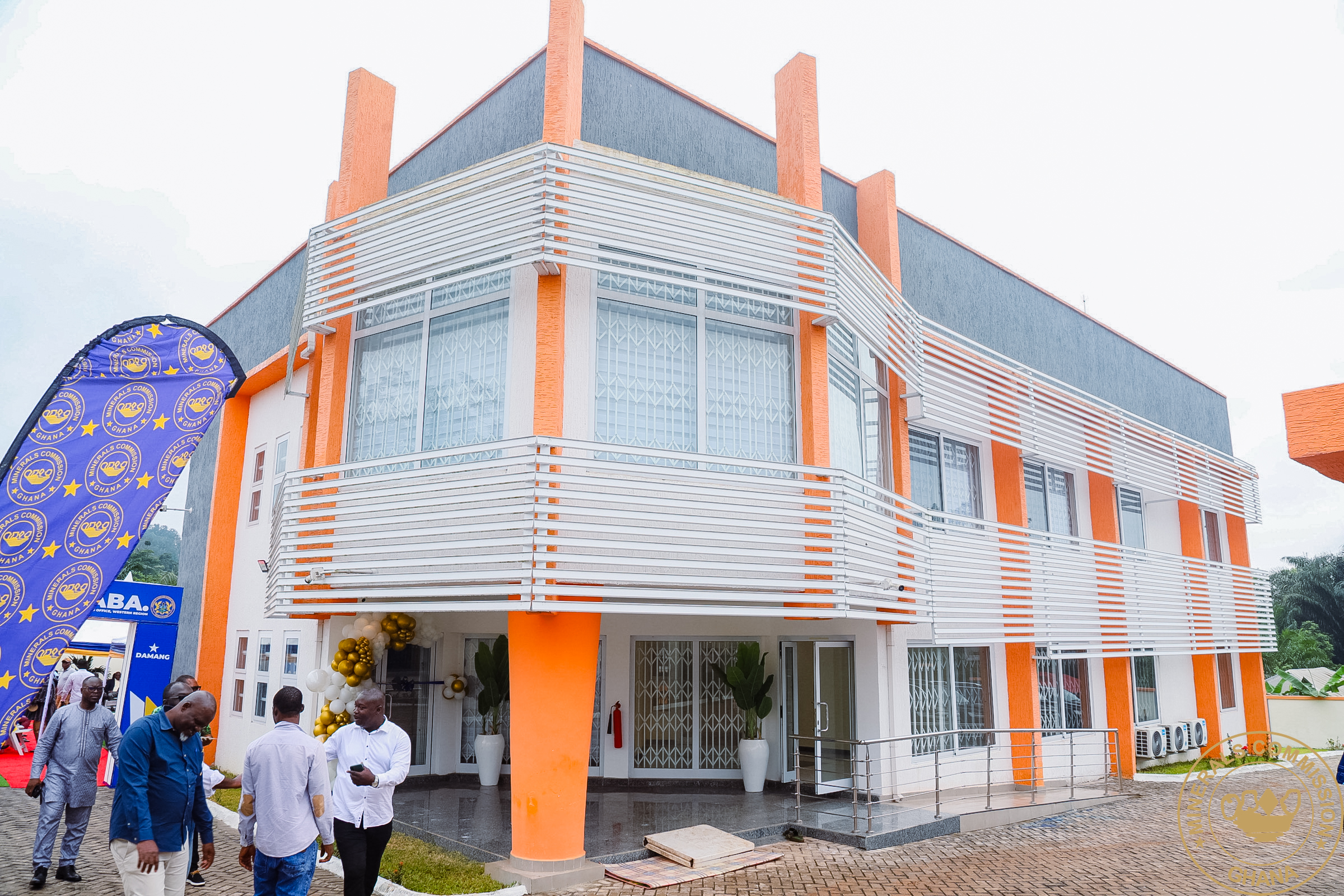
The Government has strengthened its drive to decentralise mineral resource governance with the commissioning of the Minerals Commission’s Damang District Office in the Western Region, bringing regulatory services closer to one of Ghana’s important mining communities.
The new facility, commissioned by the Minister for Lands and Natural Resources, Hon. Emmanuel Armah Kofi Buah, M.P, is expected to serve as a critical regulatory hub for mining operations and communities within Damang and surrounding areas.
Its establishment represents a significant step in the Government’s broader effort to move mineral administration beyond the traditional concentration of regulatory functions at the national level and establish stronger institutional presence in mining districts.
For communities that live alongside mining operations, the physical presence of the Minerals Commission is expected to improve access to regulatory authorities and create more opportunities for direct engagement on matters affecting their livelihoods, environment and local development.
The Damang District Office will undertake and support key regulatory functions, including licensing, inspections, environmental monitoring, occupational health and safety oversight, stakeholder engagement and enforcement of mining sector requirements.
It will also provide mining companies, local businesses, traditional authorities and community members with more direct access to the Commission’s services, potentially reducing administrative delays and strengthening communication between regulators and stakeholders.
“The future of responsible mining depends not only on what we extract, but on how we regulate, manage and share the benefits of our mineral resources.”
Speaking at the commissioning ceremony, Hon. Armah Kofi Buah described the facility as a demonstration of Government’s commitment to a community centred and bottom up approach to mineral resource governance.
The Minister emphasised the importance of local participation and consultation in decisions involving mining communities, particularly in areas where mineral extraction has profound economic, environmental and social consequences.
The policy direction reflects an understanding that effective mining regulation requires more than national frameworks and legislation; it also demands strong institutions capable of responding to realities on the ground.
By establishing a permanent regulatory presence in Damang, the Government is seeking to create a closer relationship between mineral sector regulators, mining companies and the communities that host mining activities.
The office is consequently expected to become an important link between national mining policy and local implementation, ensuring that regulatory standards are translated into practical oversight at the community level.
Mr. Isaac Tandoh, Chief Executive Officer of the Minerals Commission, reaffirmed the Commission’s commitment to responsible mining, regulatory excellence and local content development.
He stressed that decentralisation should not be reduced to the opening of physical offices, but must result in regulatory services that are accessible, responsive and effective.
“Decentralisation is not simply about constructing offices; it is about ensuring that regulation is accessible, responsive and effective,” Mr. Tandoh said.
His position places the emphasis on measurable regulatory outcomes, including improved compliance, stronger field inspections, faster stakeholder engagement and enhanced support for legitimate mining investment.
The Damang office is expected to strengthen the Commission’s ability to monitor mining activities more closely and respond to regulatory issues without relying exclusively on officials operating from distant administrative centres.
Its presence could also facilitate more regular engagement with communities on environmental management, health and safety, local development priorities and concerns arising from mining activities.
The decentralised approach is equally expected to support legitimate investors by making regulatory guidance and administrative services more accessible to mining companies operating within the area.
Local businesses could also benefit from greater engagement with the Commission, particularly as Ghana continues to promote local participation and value retention within the mining industry.
The opening of the office comes against the backdrop of growing national attention on the need to balance mineral exploitation with environmental protection, community interests and long term economic sustainability.
Ghana’s mineral resources remain an important component of the national economy, making effective regulation essential to ensuring that the benefits of mining extend beyond extraction revenues to communities, local enterprises and the wider economy.
The Chief of Damang, Nana Kwaku Armah II, attended the ceremony, underscoring the importance of traditional leadership in the governance and development of mining communities.
Hon. Wisdom Cudjoe, Member of Parliament for Prestea Huni-Valley, also joined key stakeholders of the Minerals Commission and other invited guests to witness the commissioning, reflecting broad stakeholder interest in strengthening mineral administration within the area.
The commissioning therefore marks more than the opening of another government office; it represents an institutional commitment to bringing mining regulation closer to the people, strengthening accountability and creating a more responsive framework for responsible mineral development.
As the Damang District Office begins its work, its effectiveness will ultimately be judged by its ability to translate decentralisation into stronger compliance, meaningful community participation, responsible investment and sustainable mining helping ensure that Ghana’s mineral wealth becomes a lasting national asset for present and future generations.