

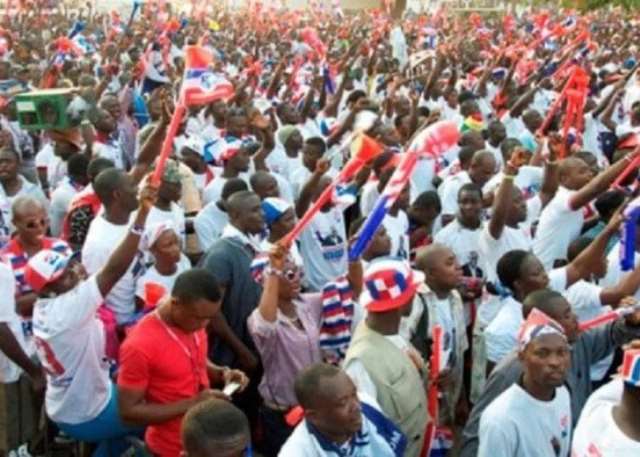
Story By: Nii Okpoti Odamtten & Muhammed Faisal Mustapha…
A deepening controversy is unfolding within the Ledzokuku Constituency of the New Patriotic Party (NPP), as serious allegations of extortion, procedural manipulation, and systemic irregularities cast a shadow over the party’s ongoing polling station elections process.
Multiple sources within the constituency describe a process increasingly defined by opaque practices and financial coercion, raising concerns about the integrity of internal party democracy at the grassroots level.
At the center of the controversy is the alleged manipulation of the party’s dues payment system a prerequisite for participation in internal elections.
Officially, the NPP’s dues framework offers a tiered structure: bronze (GH¢2), silver (GH¢5), gold (GH¢8), and platinum (GH¢10), allowing members to choose an entry level aligned with their financial capacity. However, constituency level operatives are accused of disregarding this structure, enforcing a flat minimum payment of GH¢5.
For many grassroots members, the move represents a deliberate barrier to participation.
“The rules are clear, yet they are being ignored. If GH¢2 is approved, why force GH¢5? It is nothing short of exploitation,” an aggrieved party member told this publication.
There are further claims that individuals insisting on paying the approved GH¢2 are being arbitrarily disqualified, with their nomination forms rejected or invalidated without explanation.
The controversy extends beyond dues collection into the distribution of nomination forms, where transparency has come under intense scrutiny.
Initially, constituency officials reportedly indicated that 3,000 forms were available. That figure was later revised to 7,000, without clear justification fueling suspicion among aspirants and party faithful.
“We paid collectively to streamline the process, yet we were asked to pay again. No receipts, no accountability just confusion,” another aspirant revealed.
Further allegations suggest that the electoral process has been selectively administered, with some aspirants screened or excluded based on perceived political loyalties.
Disturbingly, insider accounts indicate that confidential information provided by aspirants including their chosen positions may have been used to recruit competing candidates within the same polling stations.
“Your own declaration becomes a weapon against you. It undermines trust and defeats the purpose of fair competition,” a constituency insider said.
Compounding these concerns are reports of flawed data capture systems, which have left several eligible members omitted from the electoral register, effectively disenfranchising them.
The integrity of the process has also been questioned due to the apparent absence of properly constituted polling station electoral committees, as mandated by the party’s national leadership.
Instead, electoral area coordinators are alleged to be exerting disproportionate control, often in collaboration with incumbent executives raising fears of undue influence and conflict of interest.
Adding to the controversy are claims that aspects of the electoral process are being conducted from a private residence at Grada Estate, rather than a neutral, officially sanctioned venue. The reported political affiliation of the property owner has only heightened concerns about impartiality and oversight.
Taken together, these developments have triggered widespread dissatisfaction within the constituency, with party members warning that the situation risks eroding confidence in the NPP’s internal democratic processes.
“This is not just about one election. It is about the credibility of the party’s structures and the trust of its grassroots base,” a senior party member cautioned.
Stakeholders are now calling for urgent intervention by the party’s national leadership to investigate the allegations, enforce compliance with established guidelines, and restore transparency to the process.
Efforts to obtain official responses from constituency executives have so far yielded limited engagement.
As tensions continue to rise, the situation in Ledzokuku may prove a critical test of the NPP’s commitment to internal accountability and democratic governance.