

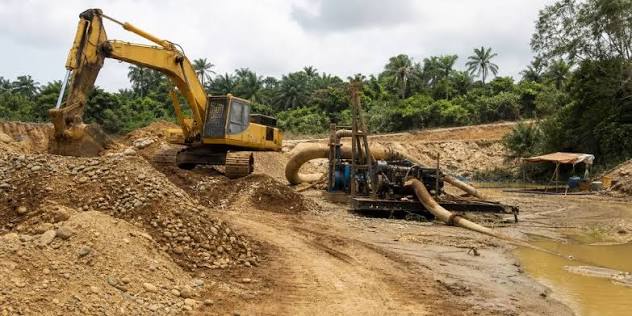
Nawara Company Limited is facing questions over its failure to settle approximately US$990,000 in outstanding annual mineral rights payments, an issue the Minerals Commission has cited as the basis for revoking the company’s mining licence over the Nsuapemso concession in the Eastern Region.
The Commission’s explanation has placed Nawara’s financial obligations at the centre of the controversy, challenging attempts to portray the revocation primarily as a politically influenced decision.
According to the Commission’s Director of Mineral Titles, Frank Asare, Nawara was formally notified in March 2025 to settle its outstanding payments within 120 days but failed to meet the deadline.
Asare disclosed the details during an interview with Kwame Nkrumah Tikese on Okay FM’s Ade Akye Abia, explaining that the deadline expired in July 2025 without payment.
The licence was subsequently revoked on September 3, 2025, following further regulatory action.
The development raises a fundamental question for Nawara: why were the outstanding obligations not settled within the period granted by the regulator?
US$990,000 Outstanding: What Happened After the Notice?
The Minerals Commission says the revocation followed Nawara’s failure to meet its financial obligations despite being given 120 days to do so.
The company’s alleged failure to settle the approximately US$990,000 debt has become a key factor in the dispute over the concession.
Asare further revealed that former Minerals Commission Chief Executive Officer Martin Ayisi recommended to the Minister of Lands and Natural Resources that Nawara’s licence be revoked.
The Commission maintains that the action was based on regulatory and financial compliance issues.
However, Nawara’s response to the specific allegation of non-payment, including any evidence of payments made, disputes over the amount owed or legal challenges to the Commission’s decision, would be important in establishing the full circumstances of the case.
Political Interference Claims Face Scrutiny
The controversy has also drawn businessman Alfred Mahama, brother of President John Dramani Mahama, into the public debate.
CMS-PRO and AA Southern Industries, the two companies seeking to operate the concession, have categorically denied that Alfred Mahama influenced the revocation of Nawara’s licence.
They insist that the decision was based on Nawara’s outstanding financial obligations and the applicable regulatory process.
The companies have urged the public not to attribute the revocation to political influence without considering the Commission’s explanation.
Their position shifts attention back to the regulator’s stated grounds for the decision, although the question of political interference would ultimately require evidence-based examination rather than competing assertions.
Nawara Has No Automatic Right to Retain the Concession
The Minerals Commission has clarified that mineral concessions belong to the state and that other eligible companies may apply to operate a concession after a previous licence has been revoked.
According to Asare, Nawara’s former licence does not automatically entitle the company to continue operating the site.
He also stressed that the company’s outstanding debt remains its responsibility and would not automatically be transferred to any new applicant.
The Commission says it will continue considering applications for the concession unless the High Court orders it to restore Nawara’s rights.
Questions Over the Alleged Takeover
Separate allegations concerning a purported violent takeover of the Nsuapemso site, including claims of violence and looting of assets, remain part of the wider dispute.
CMS-PRO and AA Southern Industries have denied that Alfred Mahama was responsible for the licence revocation, but the circumstances surrounding the subsequent entry onto the concession require separate scrutiny.
The outstanding questions include whether Nawara disputes the Commission’s stated debt, whether the company challenged the revocation through the appropriate legal channels, and what evidence exists concerning the alleged takeover and damage to property.
While the Minerals Commission has provided a specific financial and regulatory explanation for revoking the licence, Nawara’s response to the US$990,000 allegation and the claims surrounding the site remains important to a complete public understanding of the dispute.
The central issue is whether Nawara can substantiate any challenge to the Commission’s account of the unpaid obligations and the subsequent revocation, while any allegations of violence or wrongdoing must be established through verifiable evidence.