

Story By: Felix Ernest Odamtten / Mohammed Faisal Mustapha….
Ghana has called for a new era of equitable international cooperation in the mining sector, insisting that future partnerships with Russia and other resource consuming nations must prioritise local mineral processing, technology transfer, industrial development and the strengthening of domestic expertise rather than the continued export of raw materials.
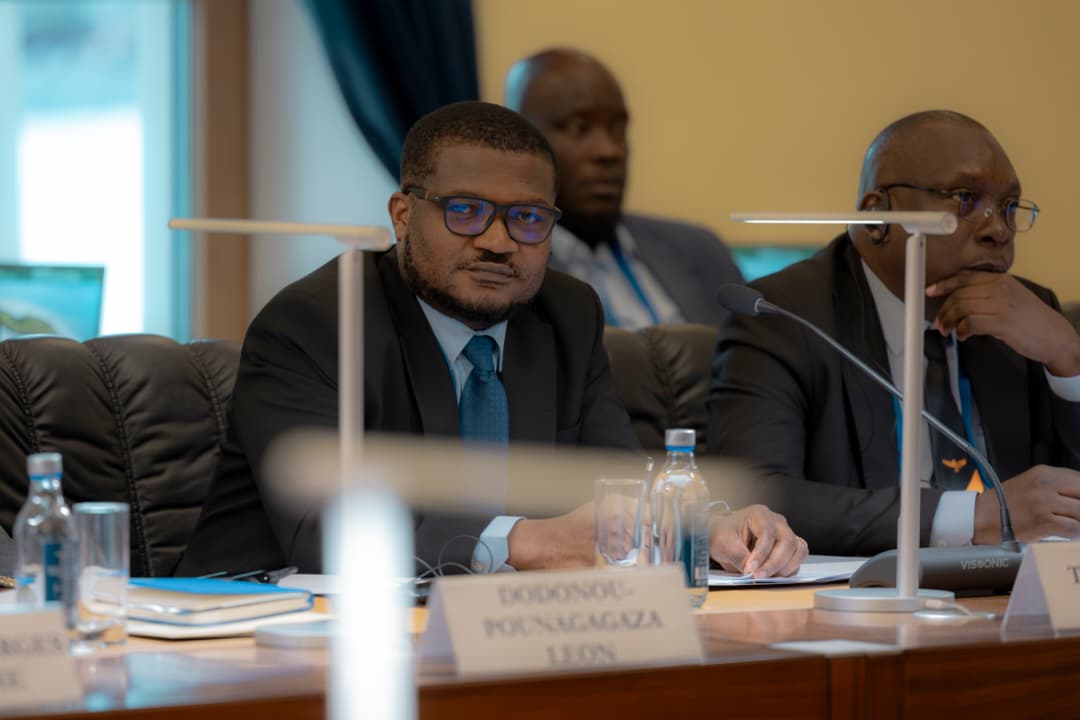
The position was articulated by the Chief Executive Officer of the Minerals Commission, Mr. Isaac Tandoh, who represented the Government of Ghana at the ministerial roundtable of the Second Russian-African Raw Materials Dialogue in Saint Petersburg, Russia. His message was unequivocal: Africa must move beyond supplying the world with minerals and secure a more substantial role in the industries those resources sustain.
The call comes against the backdrop of a longstanding challenge facing Africa’s resource rich economies. Although eight of the world’s 20 leading gold producing countries are African, only about two per cent of the continent’s natural resources are processed locally, according to figures cited in the address. The imbalance has intensified calls for African governments to rethink mineral agreements and ensure that resource extraction translates into jobs, industrial capacity and lasting economic benefits.
For Ghana, Africa’s leading gold producer, the issue represents both an economic necessity and a strategic national priority. The country is seeking partnerships that can help transform its mineral wealth into higher value products, stronger domestic industries and expanded opportunities for Ghanaian businesses, engineers and technical institutions.
Addressing delegates at the ministerial session, Mr. Tandoh emphasised that Ghana remained open to international cooperation, particularly in advanced mining technologies, technical training, research and engineering education. However, he stressed that such collaboration must be structured around clearly defined national development objectives and measurable outcomes for the country.
“All future cooperation must move beyond simple raw material extraction towards a partnership of sovereign equals,” Mr Tandoh stated, underscoring Ghana’s determination to pursue international relationships that respect its sovereignty while supporting its industrial ambitions.
Mr. Tandoh said technology transfer must go beyond the introduction of imported equipment or the deployment of foreign specialists. Ghana, he indicated, expects collaboration to equip its engineers, universities, research centres and technical institutions with practical knowledge and capabilities that remain within the country long after individual projects have been completed.
Ghana is also broadening its mineral development priorities beyond its traditional gold industry to include critical resources such as lithium, iron ore and bauxite. These minerals have growing strategic importance in global industrial production, infrastructure development and emerging technologies, creating opportunities for countries capable of establishing competitive processing and manufacturing industries.
Mr. Tandoh also highlighted Ghana’s regulatory framework and the increasing use of digital technology to improve mineral administration and oversight. He cited the Minerals Commission’s digital Mining Cadastre Administration System (MCAS) and the deployment of geofencing technology as measures supporting more transparent mineral rights administration and improved monitoring of mining operations.
The Minerals Commission CEO further called for the establishment of a formal, institutionalised Ghana-Russia Mining Cooperation Framework founded on reciprocity, practical collaboration and shared economic benefits. Such an arrangement, he suggested, could provide a more structured basis for cooperation in mineral development, engineering education, research, technology transfer and industrial investment.
The Second Russian-African Raw Materials Dialogue, running from October 12 to 16, 2026, has brought together representatives from more than 40 African countries, including over 100 heads of agencies and organisations, alongside more than 500 participants. Organised by the Ministry of Foreign Affairs of the Russian Federation, the UNESCO International Competence Centre for Mining Engineering Education and Empress Catherine II Saint Petersburg Mining University, the gathering is focused on cooperation in natural resource management, technological innovation and engineering education.
As competition for critical minerals reshapes global economic relationships, Ghana is seeking to position itself not merely as a supplier of geological resources but as an active participant in the industries built around them. Its message in Saint Petersburg is that mineral wealth should serve as a foundation for national development, with partnerships judged by their ability to create enduring productive capacity. For Ghana, the objective is clear: international mining cooperation must deliver more than extracted resources; it must help build the expertise, industries and economic opportunities that will define the country’s future.