

Story By: Felix Ernest Odamtten / Muhammad Faisal Mustapha
WASSA AMENFI WEST, WESTERN REGION, GHANA — Ghana’s campaign to protect its threatened water bodies from illegal mining has intensified along the River Tano, with the National Anti-Illegal Mining Operations Secretariat (NAIMOS) conducting a targeted operation in the Wassa Amenfi West District.
The operation, carried out on July 30, 2026, forms part of a sustained national effort to disrupt illegal mining activities along river corridors and prevent operators from using Ghana’s water bodies as conduits for mineral extraction and processing.
During the intervention, the NAIMOS Taskforce seized seven motorbikes, two water pumps and two batteries associated with the mining activities. An excavator was also rendered inoperable, reducing the capacity of operators to continue mechanised mining at the affected location.
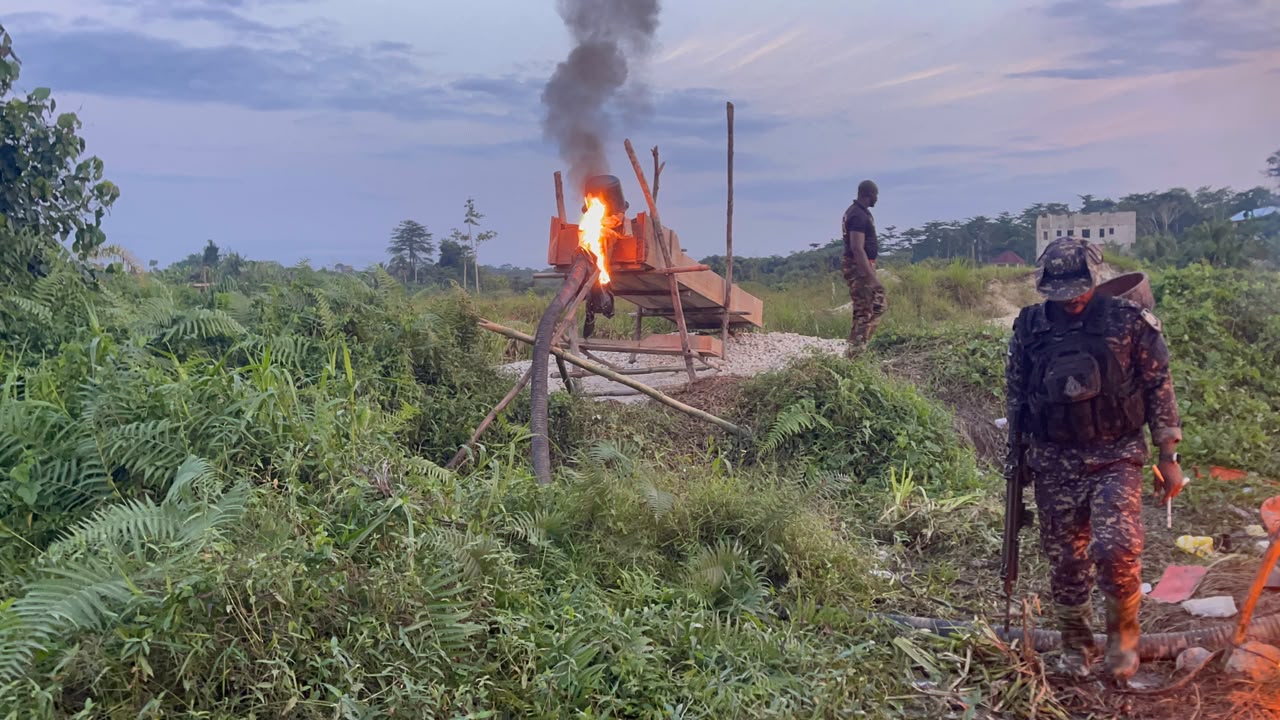
The Taskforce further destroyed five chanfang machines, six water pumps and five makeshift structures identified as supporting illegal mining activities. The destruction was aimed at dismantling both the machinery and temporary infrastructure that enable mining operations to remain active around the river.
The latest action reflects an enforcement strategy increasingly focused not only on removing illegal miners but also on denying them access to the equipment and logistical infrastructure required to sustain their operations.
«PULL QUOTE: “Protecting the River Tano requires more than clearing miners; it requires dismantling the machinery that allows illegal operations to return.”»
Illegal mining remains one of Ghana’s most persistent environmental challenges, particularly in mineral-rich areas where mining activity often overlaps with critical agricultural land and water resources.
The use of water pumps and chanfang machines in riverine mining is especially concerning because such operations can directly interfere with river systems. Mining and associated processing can disturb riverbanks, increase sedimentation and undermine the quality of water relied upon by surrounding communities.
For communities in Wassa Amenfi West, the protection of the River Tano carries implications that extend beyond environmental conservation. The river and surrounding natural resources form part of the ecological and economic foundation of communities whose livelihoods depend on land and water.
The seizure and destruction of equipment therefore represents an immediate disruption to illegal mining operators, but the longer-term challenge remains preventing the re-establishment of mining sites once enforcement teams leave the area.
«PULL QUOTE: “The real victory will come when cleared river corridors remain clear and protected.”»
NAIMOS has increasingly adopted sustained enforcement operations as part of efforts to deny illegal miners the opportunity to rebuild their activities. Such an approach requires continued surveillance, intelligence gathering and collaboration with local communities and relevant state institutions.
The latest River Tano intervention also demonstrates the importance of targeting the operational infrastructure behind illegal mining. Without water pumps, processing machines, transport and temporary structures, operators face greater difficulty restarting activities after enforcement action.
However, enforcement alone cannot resolve the wider economic and social pressures surrounding illegal mining. Long-term protection of the River Tano will require cooperation among state agencies, traditional authorities, landowners and communities to ensure that cleared areas are not reopened for illegal activities.
«PULL QUOTE: “Every river protected today is an investment in Ghana’s water security tomorrow.”»
The Wassa Amenfi West operation is therefore part of a much larger national struggle to reconcile Ghana’s mineral wealth with the protection of its environmental assets. As the country seeks to benefit from its gold resources, the cost of allowing illegal mining to degrade rivers and land remains a growing concern.
For NAIMOS, the latest operation has demonstrated the Secretariat’s continued resolve to disrupt illegal mining along critical waterways. The seizure of equipment, immobilisation of an excavator and destruction of mining infrastructure have temporarily reduced the capacity of operators along the targeted stretch of the River Tano.
The wider test, however, will be whether sustained surveillance and enforcement can prevent a return of illegal mining and allow affected areas to recover. For the River Tano and the communities that depend on it, the stakes extend far beyond a single operation: they concern the protection of Ghana’s water resources for generations to come.